

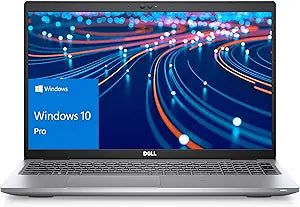


Alienware
Alienware 17 R5 2019: 17.3" FHD Gaming Laptop, i7-8750H, 24GB
FHD1080p1920 x 1080i7-8750H512GB SSD
Six cores, 8GB dedicated VRAM, and a 99Wh battery pack serious gaming performance into a 17-inch chassis built for long sessions.
Check availability
Affiliate Disclosure: As an Amazon Associate, Studio Supplies earns from qualifying purchases made through links on this page, at no additional cost to you. This helps support our editorial team.
Notice a mistake? Let Us Know
Overview
Key Features
Latest 8th Gen Intel Core i7-8750H 2.2GHz up to 4.1GHz processor Powerful six-core, twelve-way processing provides blazing-fast performance when you need it most. The Intel Turbo Boost technology delivers dynamic power on demand.
17.3" display The 1920 x 1080 resolution boasts impressive color and clarity. IPS technology for wide viewing angles.NVIDIA GeForce GTX 1070 graphics Backed by 8GB GDDR5 dedicated video memory, this ultrafast, advanced GPU fuels your games.
24GB 2400MHz DDR4 SDRAM Memory for full-power multitasking; 512GB SSD offers a compact warehouse for storing all your favourite movies, music, photos, and more in one convenient place
HDMI output expands your viewing options; 802.11ac; Dual-Band; Bluetooth 5.0; User-Facing: 2.0 MP Photo / 1080p Video camera. 1x Thunderbolt 3 1x USB 3.1 Gen 2 Type-C 2x USB 3.1 Gen 20 Type-A
With Windows 10 Home Break down boundaries and immerse yourself in the game with graphics more realistic than ever before thanks to the multi-thread scaling capabilities of the new Alienware 17.
Specifications
Screen Size
17.3 inches
Display Resolution
1920 x 1080
Processor
Intel Core i7-8750H
Processor Speed
2.2GHz (up to 4.1GHz)
RAM
24GB DDR4 SDRAM
RAM Speed
2400MHz
Storage
512GB SSD
Graphics Card
NVIDIA GeForce GTX 1070
Video Memory
8GB GDDR5
Operating System
Windows 10 Home
Wi-Fi
802.11ac Dual-Band
Bluetooth
Bluetooth 5.0
Webcam Resolution
2.0 MP Photo / 1080p Video
USB Ports
1x Thunderbolt 3, 1x USB 3.1 Gen 2 Type-C, 2x USB 3.1 Gen 2 Type-A
Video Output
HDMI
Frequently Asked Questions
What does the i7-8750H's six-core configuration mean for gaming and streaming simultaneously?
The i7-8750H runs six cores with twelve threads at up to 4.1GHz via Turbo Boost. That headroom lets you run a game, a streaming encoder like OBS, and background apps concurrently without the CPU becoming the bottleneck — a meaningful advantage over the quad-core chips common in laptops at this tier.
How capable is the GTX 1070 OC at 1080p in demanding titles?
At the native 1920x1080 resolution of this display, the GTX 1070 OC with 8GB GDDR5 delivers high-to-ultra settings in the majority of titles at or above 60fps. It handles AAA releases from the late 2010s era comfortably, though newer titles with ray tracing will exceed what the Pascal architecture supports.
Does the 512GB SSD meaningfully impact gaming load times compared to an HDD?
Yes. NVMe or SATA SSD storage cuts game load screens and level transitions dramatically compared to mechanical drives. 512GB is adequate for a curated game library but will fill quickly if you install many large titles simultaneously.
What is the practical significance of the 99Wh battery in a gaming laptop?
99Wh is the maximum capacity allowed on commercial flights, and it is large for a gaming laptop. Under light use — browsing, productivity — you can expect several hours of runtime. Under GPU load, battery life drops significantly; gaming performance on battery is also throttled compared to plugged-in operation.
What display outputs does this laptop support for external monitors?
The 17 R5 includes HDMI 2.0 and Mini DisplayPort 1.3 outputs, enabling connection to a single high-refresh or high-resolution external monitor, or two displays simultaneously alongside the built-in panel.
Related Products


