

ASRock
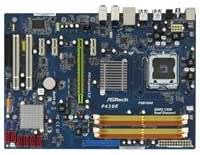
ASRock P43DE LGA775 DDR2 ATX Motherboard
Reliable Performance with Legacy Support The ASRock P43DE Motherboard offers a solid foundation for your Intel LGA775-based system. Supporting a wide range of processors and featuring ample expansion slots, this ATX motherboard is perfect for building a dependable desktop PC. Specifications: *...
$74.46*
Check availability
*Price sourced from Amazon.com. Last updated:Sep 15, 2026.Price and availability are subject to change — details.
Affiliate Disclosure: As an Amazon Associate, Studio Supplies earns from qualifying purchases made through links on this page, at no additional cost to you. This helps support our editorial team.
Notice a mistake? Let Us Know
Overview
Reliable Performance with Legacy Support
The ASRock P43DE Motherboard offers a solid foundation for your Intel LGA775-based system. Supporting a wide range of processors and featuring ample expansion slots, this ATX motherboard is perfect for building a dependable desktop PC.
Specifications: * Brand: ASRock * Model: P43DE * CPU Socket Type: LGA 775 * CPU Type: Intel Core 2 Extreme / Core 2 Quad / Core 2 Duo / Pentium Dual Core / Celeron Dual Core / Celeron * FSB: 1600/1333/1066/800MHz * Chipset: Intel P43 (North Bridge), Intel ICH10 (South Bridge) * Memory Slots: 4 x 240-pin * Memory Standard: DDR2 1200(OC)/1066/800/667 * Maximum Memory Supported: 16GB * Channel Supported: Dual Channel * PCI Express 2.0 x16: 1 * PCI Express x1: 3 * PCI Slots: 2 * PATA: 1 x ATA133 (2 Dev. Max) * SATA: 6 x 3Gb/s * Audio Chipset: VIA VT1708S * Audio Channels: 8 Channels * LAN Chipset: Realtek 8111DL * Max LAN Speed: 10/100/1000Mbps * Rear Panel Ports: 2 x PS/2, 6 x USB 2.0, 1 x Optical S/PDIF Out, 1 x Coaxial S/PDIF Out, 6 x Audio Ports * Onboard USB: 2 x USB 2.0 headers (support 4 USB 2.0 ports) * Form Factor: ATX * Power Pin: 24 PinSpecifications
Socket Type
LGA775
Memory Type
DDR2
Form Factor
ATX
Chipset
P43DE
Frequently Asked Questions
What CPU socket type does the ASRock P43DE motherboard support?
The ASRock P43DE motherboard is designed for LGA775 socket processors.
What kind of memory does this motherboard use?
This motherboard supports DDR2 memory.
What form factor is the ASRock P43DE motherboard?
The ASRock P43DE motherboard comes in an ATX form factor.
Is this motherboard compatible with modern CPUs?
No, the LGA775 socket is an older standard, compatible only with Intel processors from that generation, not modern CPUs.
Does this motherboard support DDR3 or DDR4 RAM?
No, this motherboard exclusively supports DDR2 memory and is not compatible with DDR3 or DDR4 modules.
Can this motherboard fit into any PC case?
Its ATX form factor is widely compatible, but users should ensure their PC case supports ATX motherboards.
What are the main limitations of this ASRock P43DE motherboard?
Its primary limitations include support for older LGA775 processors, reliance on DDR2 RAM, and the absence of modern connectivity options like USB 3.0 or M.2 slots.
Related Products


