

ASRock
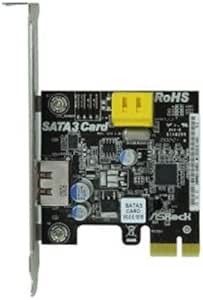
ASRock SATA 3 CARD 2-Port eSATA PCIe Card
Enhance Your Connectivity with the ASRock SATA 3 Card The ASRock 2-Port SATA 3.0 & 1-Port eSATA Combo PCI Express x1 Card provides a simple and effective way to add extra SATA ports to your system. Ideal for expanding storage capabilities or connecting external devices, this card offers fast ...
Check availability
Affiliate Disclosure: As an Amazon Associate, Studio Supplies earns from qualifying purchases made through links on this page, at no additional cost to you. This helps support our editorial team.
Notice a mistake? Let Us Know
Overview
Enhance Your Connectivity with the ASRock SATA 3 Card
The ASRock 2-Port SATA 3.0 & 1-Port eSATA Combo PCI Express x1 Card provides a simple and effective way to add extra SATA ports to your system. Ideal for expanding storage capabilities or connecting external devices, this card offers fast data transfer speeds and reliable performance.
Key Specifications:
- Ports: 2 x SATA 3.0, 1 x eSATA
- Interface: PCI Express x1
Key Features
2X faster transfer speed Speed upto 6 Gb/s
Upgrade Flexibility World’s only SATA3 & eSATA3 combo
Chipset: Marvell 88SE9123 Interface: PCI Express 2.0 x1
Connector: 2x SATA 3.0 ports; 1x eSATA Port(shared with 1 SATA3 port)
Support OS: Microsoft Windows 7/7 64-bit/Vista/Vista 64-bit/XP/XP 64-bit
Specifications
Transfer Speed
Up to 6 Gb/s
Interface
PCI Express 2.0 x1
Chipset
Marvell 88SE9123
Internal Connectors
2x SATA 3.0 ports
External Connectors
1x eSATA Port (shared with 1 SATA3 port)
OS Support
Microsoft Windows 7/7 64-bit/Vista/Vista 64-bit/XP/XP 64-bit
Frequently Asked Questions
What is the maximum data transfer speed supported by this PCIe card?
This PCIe card supports transfer speeds of up to 6 Gb/s, offering 2X faster performance for compatible SATA 3 and eSATA 3 devices.
Which operating systems are compatible with the ASRock SATA 3 CARD?
The ASRock SATA 3 CARD supports Microsoft Windows 7, Windows 7 64-bit, Vista, Vista 64-bit, XP, and XP 64-bit operating systems.
What type of interface does this expansion card use to connect to a motherboard?
This card utilizes a PCI Express 2.0 x1 interface for connecting to a compatible slot on your motherboard.
How many SATA 3 and eSATA ports does this card provide?
The card features two SATA 3.0 ports and one eSATA port, with the eSATA port being shared with one of the SATA 3 ports.
What chipset is used in the ASRock SATA 3 CARD?
The ASRock SATA 3 CARD is equipped with the Marvell 88SE9123 chipset, which facilitates its high-speed data transfer capabilities.
Related Products


