Cooler Master

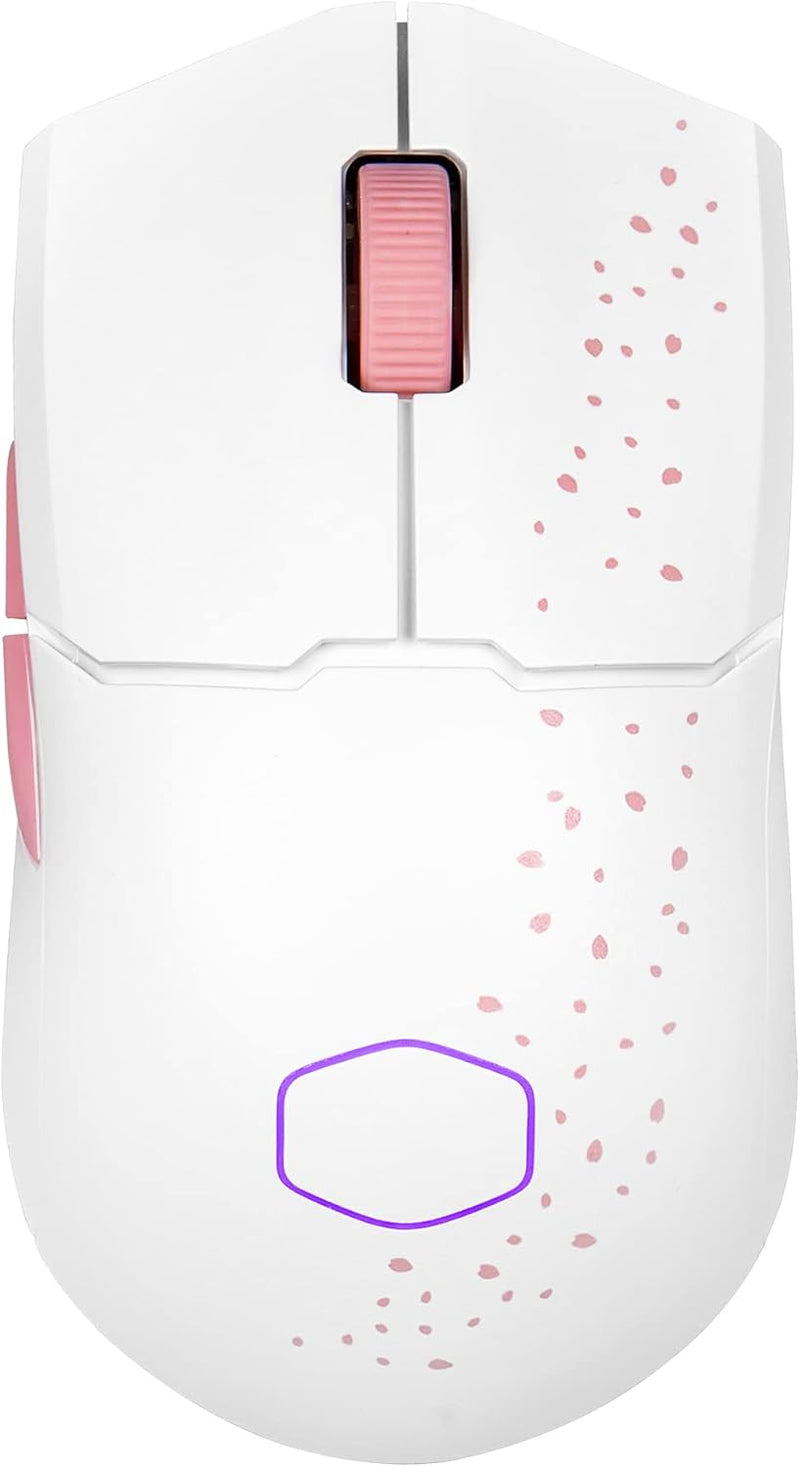
Cooler Master MM-712-WWOH2 Sakura Wireless Gaming Mouse

4.0 (167 reviews)
Bluetooth 5.1

At 59g with a 19,000 DPI optical sensor and tri-mode wireless, the MM712 Sakura delivers esports-grade precision without the weight tax.

$49.99*
Check availability

*Price sourced from Amazon.com. Last updated:Jul 14, 2026.Price and availability are subject to change.

Affiliate Disclosure: Studio Supplies may earn a commission from qualifying purchases made through links on this page, at no additional cost to you. This helps support our editorial team.

Notice a mistake? Let Us Know

Overview

The Cooler Master MM712 Sakura Edition is a 59-gram ambidextrous gaming mouse built around a pro-grade optical sensor adjustable to 19,000 DPI, optical micro switches rated at 70 million actuations, and a tri-mode wireless system spanning wired, 2.4GHz, and Bluetooth 5.1. The 59g weight is achieved through a seamless chassis — a departure from the visible honeycomb cutouts of earlier lightweight gaming mice — which maintains structural rigidity while eliminating the debris-collection and texture trade-offs of perforated shells. The optical micro switches are the performance centerpiece: by replacing the physical contact mechanism with a light-beam actuation, Cooler Master eliminates the ~5ms debounce delay of traditional switches and removes the primary wear mechanism entirely, which is why the 70-million-click rating is credible rather than aspirational.

This mouse is designed for the competitive PC gamer who has made weight reduction a primary purchase criterion, but does not want to sacrifice wireless flexibility or longevity. The 2.4GHz mode is the competitive use case; Bluetooth 5.1 addresses multi-device productivity users who want the same hardware at their workstation. Pure PTFE feet are a meaningful spec over mixed-material alternatives — PTFE's coefficient of friction is among the lowest of any solid material, and the feet's durability means the glide characteristics will not degrade noticeably over months of daily use. The Sakura Edition's pink colorway is the only differentiator from the standard MM712, making it a targeted choice for users whose build aesthetic aligns with the Sakura branding.

Key Features

Hybrid Wireless Tech: Choose from wired mode, 2.4GHz wireless, or Bluetooth 5.1 to connect multiple devices

Seamless Lightweight Design: Honeycomb shell housing has been upgraded to a seamless chassis with ambidextrous shape that still keeps the total weight at 59g

Gaming-Grade Hardware: Pro-grade sensor adjustable up to 19,000 DPI, and optical micro switches rated for 70 million clicks and near-instantaneous input time

Ultraweave Cable: Super lightweight and engineered in-house to prevent cable snag when swiping and unnecessary cable drag when in battle

Pure PTFE Mouse Feet for Superior Glide: New-and-improved feet made with PTFE material for low friction and high durability provides a smooth, fast glide without cable pull

Specifications

Wireless Technology
2.4GHz, Bluetooth 5.1, Wired
Weight
59g
Sensor
Optical, adjustable up to 19,000 DPI
Switches
Optical micro switches, rated 70 million clicks
Cable
Ultraweave (lightweight, low-drag)
Mouse Feet
Pure PTFE
Shape
Ambidextrous
Color
Pink (Sakura Edition)
Battery Life
180 hours (average across modes)

Pros & Cons

👍 Pros

  • 59g weight achieved via seamless chassis engineering — no sacrificed structural integrity from external cutouts
  • 19,000 DPI optical sensor covers the full range from low-sensitivity precision aiming to high-sensitivity desktop navigation without hardware switching
  • Optical micro switches rated at 70 million clicks eliminate contact wear and debounce delay present in traditional mechanical switches
  • Tri-mode connectivity (wired, 2.4GHz, Bluetooth 5.1) allows the same mouse to serve competitive gaming and multi-device productivity workflows
  • Pure PTFE feet provide low-friction, high-durability glide across both cloth and hard mousepads

👎 Cons

  • 180-hour battery life figure is an aggregate across modes — real-world 2.4GHz competitive use will deliver substantially lower per-charge runtime than the headline number implies
  • Ambidextrous shape lacks dedicated thumb contours on both sides, meaning left-handed users get functional symmetry but not ergonomic optimization
  • The Sakura Edition's pink colorway and aesthetic branding limits appeal in professional or neutral-colored desk setups
  • Bluetooth 5.1 mode introduces latency unsuitable for competitive gaming — users who switch between devices frequently must manage the mode-switching workflow
  • USB receiver for 2.4GHz occupies a USB-A port permanently during wireless gaming use

Frequently Asked Questions

The MM712 supports three connection modes: wired via the included Ultraweave cable, 2.4GHz wireless via USB receiver, and Bluetooth 5.1. The 2.4GHz mode is the performance path — it provides the low-latency, high-polling-rate connection required for competitive gaming. Bluetooth 5.1 introduces higher latency and is appropriate for desktop productivity or multi-device switching, not esports use. Wired mode eliminates wireless variables entirely and adds no weight penalty thanks to the Ultraweave cable's minimal drag characteristics.
Earlier MM7xx models used a visible honeycomb cutout pattern for weight reduction, which could collect debris and created a different grip texture. The MM712 Sakura's seamless chassis achieves the same 59g target weight through internal structural optimization rather than external holes, resulting in a smooth, closed surface that is easier to clean and more rigid under lateral grip pressure.
The optical micro switches are rated for 70 million actuations. Optical switches use a light beam rather than physical contact to register a click, which eliminates the debounce delay inherent in traditional mechanical switches and removes the primary wear mechanism — there is no contact metal to oxidize or pit.
The ambidextrous design provides symmetric button placement accessible from either hand, but like most symmetrical mice, it does not include dedicated thumb rest contours on both sides. Left-handed users gain functional use, but the ergonomic optimization of a dedicated left-hand mouse is absent.
The specified average battery life of 180 hours applies to use across modes. Bluetooth 5.1 is significantly more power-efficient than 2.4GHz wireless, so Bluetooth mode will extend battery life considerably beyond what competitive 2.4GHz use delivers. Expect meaningfully shorter runtime in high-polling 2.4GHz mode than the aggregate figure suggests.