



Corsair
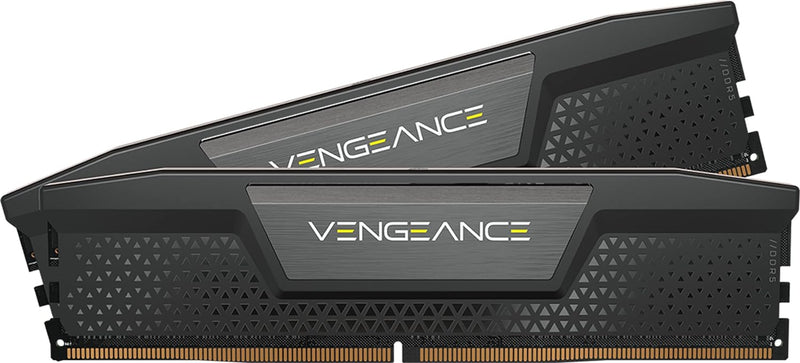
Corsair CMK64GX5M2B6400C32 VENGEANCE DDR5 64GB 6400MHz RAM
64GB of DDR5 at 6400MHz CL32 gives your high-core-count Intel platform the memory bandwidth to stop waiting and start rendering.
$1,229.99*
View on Amazon
✓ In Stock on Amazon.com
*Price sourced from Amazon.com. Last updated:Oct 24, 2026.Price and availability are subject to change — details.
Affiliate Disclosure: As an Amazon Associate, Studio Supplies earns from qualifying purchases made through links on this page, at no additional cost to you. This helps support our editorial team.
Notice a mistake? Let Us Know
Overview
Key Features
Do it All, and Do it Faster: As modern CPUs feature more and more cores, the unprecedented speed of DDR5 ensures your high-end CPU gets data quickly, enabling faster processing, rendering, and buffering than ever before.
Onboard Voltage Regulation: Makes for easier, more finely-tuned, and more stable overclocking through CORSAIR iCUE software than previous generation motherboard control.
Custom Intel XMP 3.0 Profiles: Customize and save your own XMP profiles via iCUE to tailor performance by app or task for greater efficiency.
Powerful CORSAIR iCUE Software: Enables real-time frequency readings, onboard voltage regulation, and custom XMP profiles.
Compact Form-Factor: Low clearance ensures wide compatibility with nearly any DDR5 build.
Specifications
Memory Type
DDR5 RAM
Capacity
64GB
Frequency Speed
6400MHz
Product Line
VENGEANCE
Voltage Regulation
Onboard (via CORSAIR iCUE software)
XMP Profile Support
Custom Intel XMP 3.0 Profiles
Software Compatibility
CORSAIR iCUE Software
Form-Factor
Compact (Low clearance)
Similar Products
Other products from the same family that visitors often consider:
 Currently Unavailable
Corsair CMK64GX5M4B6600C32 VENGEANCE 64GB DDR5 RAM
Check on Amazon → ✓ Available
Corsair VENGEANCE DDR5 64GB 6000MHz PC Memory
$1,443.96
View on Amazon → ✓ Available
Corsair CMH64GX5M2B6400C32 Vengeance RGB DDR5 64GB
View on Amazon → Currently Unavailable
Corsair CMK32GX5M2B6400C32 Vengeance 32GB DDR5 6400MHz RAM
Check on Amazon → Currently Unavailable
Corsair CMK64GX5M2B6000C40 64GB Vengeance DDR5 RAM 6000MHz
Check on Amazon →Frequently Asked Questions
What Intel platforms is the CMK64GX5M2B6400C32 compatible with?
This kit is designed for Intel DDR5 platforms — specifically 12th, 13th, and 14th Gen Intel Core processors on LGA1700 motherboards, and Intel's LGA1851 (Core Ultra 200 series) boards that support DDR5. XMP 3.0 profiles are Intel-native; AMD EXPO support is not listed, so AMD AM5 users should verify board compatibility before purchasing.
What does CL32 timing mean at 6400MHz, and is it actually tight?
CL32 at 6400MHz translates to a true latency of roughly 10 nanoseconds (CL / (MHz/2000)). That's genuinely competitive for this speed tier — many 6400MHz kits ship at CL36 or CL40, so the CL32 here represents tighter timings that benefit latency-sensitive workloads like gaming and real-time audio production.
Does this kit require XMP enabled in BIOS to run at 6400MHz?
Yes — without XMP enabled, the kit defaults to JEDEC standard speeds (typically 4800MHz). Enabling XMP 3.0 in your BIOS unlocks the 6400MHz profile. The Corsair iCUE software also allows creating and saving custom sub-profiles for per-application tuning.
Will this RAM fit under a large aftermarket CPU cooler?
The low-profile form factor (1.38 inches tall) is specifically engineered for clearance compatibility with large tower coolers. Verify your cooler's lowest heatsink fin height against the 1.38" RAM height — it should clear the vast majority of top-tier air coolers on the market.
What does onboard voltage regulation on this kit actually change for overclocking?
Traditional DDR4 and earlier DDR5 kits relied on the motherboard's VRM to regulate memory voltage — introducing variance and instability. The CMK64GX5M2B6400C32 regulates voltage on the DIMM itself via the PMIC chip, which means finer-grained control through iCUE software and more stable delivery at elevated voltages during overclocking.
Related Products
