



Corsair
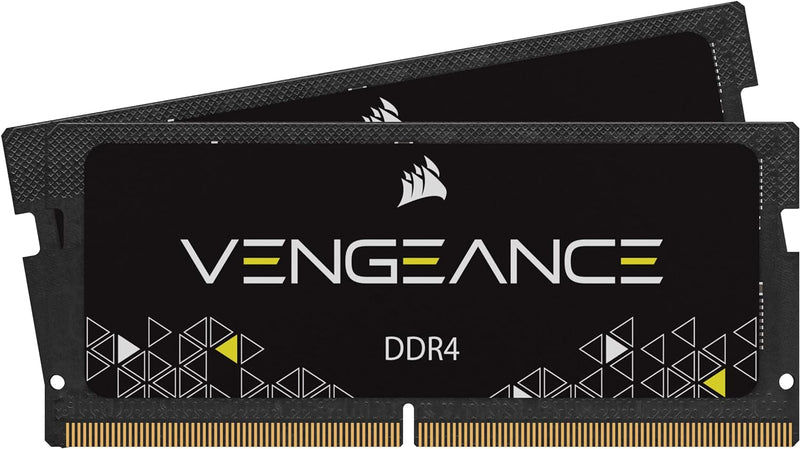
Corsair CMSX32GX4M2A3200C22 32GB Vengeance DDR4 SODIMM Laptop Memory
3200MHz dual-channel SODIMM kit that unlocks the full memory bandwidth your 8th-gen+ Intel or Ryzen 4000 laptop was always capable of.
View price on Amazon
Affiliate Disclosure: As an Amazon Associate, Studio Supplies earns from qualifying purchases made through links on this page, at no additional cost to you. This helps support our editorial team.
Notice a mistake? Let Us Know
Overview
Key Features
32GB (2x16GB) DDR4 SODIMM kit for 8th Generation or newer Intel Core i7, and AMD Ryzen 4000 Series notebooks
Auto-overclocking with compatible notebooks (no BIOS configuration required)
22-22-22-53 latency
3200MHz
1.2V
Specifications
Brand
Corsair
Model
CMSX32GX4M2A3200C22
ASIN
B08GSTF5NJ
Total Capacity
32GB (2×16GB)
Type
DDR4 SODIMM
Speed
3200MHz
Latency (CAS)
CL22-22-22-53
Voltage
1.2V
Platform Compatibility
Intel Core i7 8th Gen+, AMD Ryzen 4000 Series notebooks
Auto-Overclocking
Yes (no BIOS configuration required on compatible platforms)
Frequently Asked Questions
Will this kit work with my specific laptop model?
Compatibility depends on two things: your laptop must have two accessible SODIMM slots (some ultrabooks solder RAM), and it must support DDR4 at 3200MHz — which applies to 8th Generation or newer Intel Core i7 and AMD Ryzen 4000 Series platforms. Check your laptop's service manual to confirm slot accessibility before purchasing.
What does "auto-overclocking" mean on this kit — does it require BIOS changes?
No BIOS configuration is required. On compatible notebooks, the kit's XMP/SPD profile is read automatically by the memory controller, and the system runs the modules at their rated 3200MHz without manual intervention. On incompatible platforms, the kit defaults to JEDEC standard speeds (typically 2400 or 2666MHz).
What performance improvement should I expect versus a standard 2666MHz laptop kit?
The bandwidth difference between 2666MHz and 3200MHz DDR4 in dual-channel is approximately 10–12% in memory-bound workloads. The larger gain typically comes from moving to dual-channel at all — a single 32GB module would run half the bandwidth of this 2×16GB configuration. Dual-channel is especially impactful for integrated graphics performance on AMD Ryzen platforms.
Is CL22 latency a concern at 3200MHz?
CL22 at 3200MHz translates to approximately 13.75ns absolute latency — comparable to CL16 at 2400MHz. For a laptop kit running at 1.2V, this is a reasonable trade-off: the lower voltage preserves battery life and reduces thermal load, while the higher frequency compensates for the looser timings in bandwidth-heavy workloads.
Can this kit be used as a single 16GB module to start?
Technically yes — a single 16GB module will function — but the system will run in single-channel mode, cutting available memory bandwidth roughly in half. For best performance, install both modules together to enable the dual-channel configuration this kit is designed around.
Related Products
