

Corsair
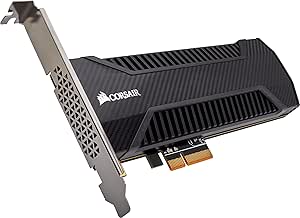
Corsair CSSD-N400GBNX500 Neutron NX500 400GB NVMe PCIe SSD
400GB NVMe
Accelerate Your System with Lightning-Fast StorageIntroducing the Corsair CSSD-N400GBNX500 Neutron Series NX500 400GB. This NVMe PCIe SSD delivers blistering speeds, reducing load times and enhancing overall system responsiveness. 400GB Capacity NVMe PCIe 3.0 x4 Interface Add-in Card...
Check availability
Affiliate Disclosure: As an Amazon Associate, Studio Supplies earns from qualifying purchases made through links on this page, at no additional cost to you. This helps support our editorial team.
Notice a mistake? Let Us Know
Overview
Accelerate Your System with Lightning-Fast Storage
Introducing the Corsair CSSD-N400GBNX500 Neutron Series NX500 400GB. This NVMe PCIe SSD delivers blistering speeds, reducing load times and enhancing overall system responsiveness.
- 400GB Capacity
- NVMe PCIe 3.0 x4 Interface
- Add-in Card (AIC) Form Factor
- Sequential Read: Up to 2800 MB/s
- Sequential Write: Up to 1600 MB/s
- Static and dynamic wear-leveling
- Specially designed heat sink
Key Features
NVMe Interface: Up to 5x faster read and write speeds than SATA3.0 (6 Gbit/s, 600 MB/s)
Mind-blowing speed: Ultrafast sequential read/write and IOPs. Supported platforms: Intel 100, 200, X99, X299 chipsets AMD Socket AM4 platform
PCI Express SSD 3.0 x4: Transferring data over PCIe drastically boosts bandwidth, producing speeds unmatched by SATA connections
Highly effective cooling: Specially designed heatsink is built for efficiency to keep your games running at peak performance
Multi-level cell (MLC) endurance: Improved reliability and performance over Triple-Level Cell (TLC) SSDs
Specifications
Brand
Corsair
Model
CSSD-N400GBNX500 Neutron NX500
Capacity
400GB
Interface
NVMe PCIe 3.0 x4
Form Factor
PCI Express SSD
Flash Type
Multi-level cell (MLC)
Cooling
Specially designed heatsink
Supported Platforms (Intel)
100, 200, X99, X299 chipsets
Supported Platforms (AMD)
Socket AM4 platform
Frequently Asked Questions
What does "up to 5x faster read and write speeds than SATA3.0" translate to in actual MB/s?
While specific numbers aren't provided, SATA3.0 typically offers speeds of 6 Gbit/s (600 MB/s), so "up to 5x faster" would imply potential speeds significantly higher than 3000 MB/s.
Will this NVMe PCIe SSD be compatible with an older motherboard that only has SATA ports?
No, this NVMe PCIe SSD requires a dedicated M.2 slot that supports NVMe protocol and PCIe 3.0 x4 lanes; it is not compatible with standard SATA ports.
How does the "specially designed heatsink" benefit the SSD's performance?
The heatsink helps to dissipate heat generated during intense operations, preventing thermal throttling and ensuring the SSD can maintain its peak performance for longer periods.
Is this 400GB SSD suitable as a primary drive for a gaming PC?
Yes, with its NVMe interface and high speeds, the 400GB capacity is suitable as a primary drive for the operating system and a selection of frequently played games, providing fast boot and load times.
What is the expected lifespan or endurance of this MLC-based SSD compared to TLC drives?
MLC (Multi-level cell) endurance generally offers higher write endurance and reliability over TLC (Triple-Level Cell) SSDs, making it suitable for more demanding workloads, though specific TBW is not listed.
Does the Corsair Neutron NX500 require any special drivers for installation?
Most modern operating systems have native NVMe support, so specific drivers might not be immediately necessary for basic functionality, but manufacturer-provided drivers can optimize performance.
Can this SSD be installed in a laptop, or is it primarily for desktop systems?
This PCIe SSD typically comes in an add-in-card form factor with a heatsink, making it primarily designed for desktop systems with available PCIe slots, rather than most laptops.
Related Products
