



Crucial
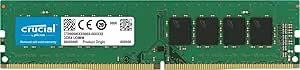
Crucial CT8G4DFD824A 8GB DDR4 2400MHz Desktop Memory
8GB DDR4
DDR4-2400 at CL17 gives budget desktop builds a clean, reliable memory foundation with 40% lower power draw than DDR3.
View price on Amazon
Affiliate Disclosure: As an Amazon Associate, Studio Supplies earns from qualifying purchases made through links on this page, at no additional cost to you. This helps support our editorial team.
Notice a mistake? Let Us Know
Overview
Key Features
Speeds start at 2400 MT/s and faster data rates are expected to be available as DDR4 technology matures
Increase bandwidth by up to 32%
Reduce power consumption by up to 40%
Faster burst access speeds for improved sequential data throughput
Dual Ranked, x8 based, Unbuffered DIMM
Specifications
Capacity
8GB
Memory Type
DDR4
Speed
2400 MT/s (PC4-19200)
Latency
CL17
Form Factor
DIMM
Pin Count
288-pin
Configuration
Dual Ranked, x8 based, Unbuffered
Model Number
CT8G4DFD824A
Similar Products
Other products from the same family that visitors often consider:
 Currently Unavailable
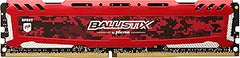
Crucial BLS8G4D240FSE Ballistix 8GB DDR4 2400MHz Gaming Memory
Check on Amazon →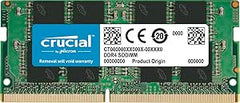 ✓ Available
Crucial CT8G4SFD824A 8GB DDR4 2400MHz SODIMM Laptop Memory
$63.49
View on Amazon → Currently Unavailable
Crucial BLE8G4D26AFEA 8GB DDR4 2666 Desktop Memory
Check on Amazon →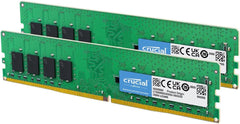 ✓ Available
Crucial CT2K8G4DFS824A RAM 16GB DDR4 2400 MHz Desktop Memory
$112.88
View on Amazon → ✓ Available
Crucial BL8G26C16U4W 8GB DDR4 2666 White Gaming RAM
$150.99
View on Amazon →Frequently Asked Questions
Will this module work in a dual-channel configuration if I add a second stick?
Yes — pairing two CT8G4DFD824A modules in matching slots activates dual-channel mode on compatible motherboards, effectively doubling the memory bandwidth and improving performance in bandwidth-sensitive workloads like video encoding and gaming. Check your motherboard manual for the correct slot pairing.
What does "Dual Ranked, x8 based" mean for compatibility?
Dual-ranked means the module is organized as two logical ranks of memory chips, which can slightly improve performance under heavy load compared to single-ranked modules. x8 refers to the chip width. Most Intel and AMD mainstream platforms handle dual-rank DDR4 without issue, but check your motherboard's QVL (Qualified Vendor List) if you're running four sticks total, as some boards have limitations with four dual-rank modules.
Does this RAM run at 2400 MT/s by default, or does it need XMP enabled?
It runs at 2400 MT/s by default — no XMP profile is required. It will train to 2400 automatically on any DDR4-compatible motherboard without any BIOS changes.
Is this ECC or non-ECC memory?
This is non-ECC, unbuffered DIMM memory. It is not suitable for workstations or servers that require error-correcting memory. It is designed for standard consumer desktop platforms.
What is the rated latency and what does CL17 mean in practice?
CL17 means there is a 17-cycle delay between a memory request and the first data being available. At 2400 MT/s, that translates to approximately 14.2 nanoseconds of latency — acceptable for everyday productivity and gaming, though tighter-latency kits (CL14–CL16) at the same speed will show marginal gains in latency-sensitive benchmarks.
Related Products


