



Dell
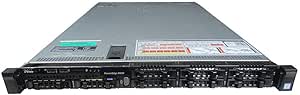
Dell Intel Xeon PowerEdge R630 Server (Renewed)
Dual Xeon E5-2620 V3 CPUs and 1536GB RAM deliver enterprise-grade compute density at a fraction of new server pricing.
View price on Amazon
Affiliate Disclosure: As an Amazon Associate, Studio Supplies earns from qualifying purchases made through links on this page, at no additional cost to you. This helps support our editorial team.
Notice a mistake? Let Us Know
Overview
Reliable Performance for Your Business: Dell PowerEdge R630 Server (Renewed)
The Dell PowerEdge R630 is a workhorse server, perfect for businesses needing a cost-effective and dependable solution. This Renewed server delivers substantial processing power and ample storage for various applications and workloads.
- Processors: 2 x Intel Xeon E5-2620 V3 Six Core 2.4Ghz
- Memory: 1536GB RAM
- Storage: 2 x 300GB 15K HDD
- RAID Controller: H730
Frequently Asked Questions
What workloads is the dual E5-2620 V3 configuration well-suited for?
The two E5-2620 V3 processors give you 12 physical cores / 24 threads at 2.4GHz (3.2GHz turbo) with a combined 30MB L3 cache. This configuration handles virtualization hosts (VMware ESXi, Hyper-V), database servers, CI/CD build agents, and mid-scale containerized workloads well — anywhere thread count matters more than single-core clock speed.
What does 1536GB of RAM mean in practical terms?
1.5TB of RAM is substantial even by enterprise standards — it supports running dozens of memory-intensive VMs simultaneously, large in-memory databases (SAP HANA, SQL Server, Redis clusters), or high-frequency analytics workloads. The R630 supports 24 DIMM slots across two processors, which is how that capacity is achievable.
What's the storage configuration and how expandable is it?
This unit ships with 2x 300GB 15K SAS HDDs. The R630 supports up to 8x 2.5-inch drive bays and the H730 RAID controller enables RAID 0, 1, 5, 6, 10, 50, and 60 configurations. You can expand storage by adding additional 2.5-inch SAS or SATA drives — the 300GB 15K drives are suitable as OS/boot volumes, not primary data storage for most workloads.
What does "Renewed" mean for a server in this class?
Dell Renewed servers have been refurbished, tested, and certified to meet functional specifications. For rack servers like the R630, this typically includes component inspection, firmware updates, and hardware testing. Unlike consumer renewals, enterprise servers are often returned from leases in good mechanical condition — the primary risk is around remaining drive health and memory reliability, which should be verified post-purchase.
What generation of PCIe does the R630 use, and does it matter for modern NVMe expansion?
The R630 uses PCIe 3.0. Adding PCIe 3.0 NVMe drives via Dell's NVMe backplane or an add-in card is possible, though the native controller configuration ships with SAS/SATA. PCIe 3.0 x4 lanes deliver up to ~4GB/s — sufficient for most NVMe storage use cases without bottlenecking modern NVMe drives.
Related Products


