



Dell
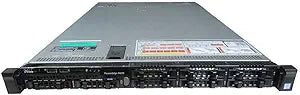
Dell Intel Xeon PowerEdge R630 Server: 768GB RAM, 2x 400GB SSD (Renewed)
768GB of DDR4 ECC RAM and dual Xeon E5-2620 v3 compute put serious virtualization and data workloads within reach of a used-server budget.
View price on Amazon
Affiliate Disclosure: As an Amazon Associate, Studio Supplies earns from qualifying purchases made through links on this page, at no additional cost to you. This helps support our editorial team.
Notice a mistake? Let Us Know
Overview
High-Performance Server Solution: Dell PowerEdge R630 (Renewed)
The Dell PowerEdge R630 is a versatile and powerful server designed for demanding workloads and enterprise environments. With dual Intel Xeon processors, extensive memory, and fast SSD storage, this renewed server delivers exceptional performance and scalability.
Specifications:
- Brand: Dell
- Model: Intel Xeon
- Processors: 2X E5-2620 V3 Six Core 2.4Ghz
- Memory: 768GB RAM
- Storage: 2X 400GB SSD
- Raid Controller: H330
Frequently Asked Questions
What processors are installed and what does that mean for workload capacity?
The R630 ships here with dual Intel Xeon E5-2620 v3 CPUs — each a six-core, twelve-thread part running at 2.4GHz base. That gives you 12 physical cores / 24 threads total, which is sufficient for mid-density VMware/Hyper-V deployments, Kubernetes clusters, or database servers that benefit more from core count than single-thread speed.
Is 768GB of RAM actually usable, or is it a configuration ceiling?
It is the installed capacity, not a theoretical maximum. The R630 supports up to 1.5TB across its 24 DIMM slots, so this configuration uses roughly half the platform's memory headroom — leaving room to expand if workloads grow.
What RAID controller is included and what RAID levels does it support?
The H330 RAID controller is a 12Gbps SAS/SATA adapter supporting RAID 0, 1, 5, 10, and 50. It provides hardware RAID without consuming host CPU cycles, which matters when the Xeon cores are already committed to VMs or database processing.
What condition should I expect from a renewed Dell PowerEdge R630?
Renewed enterprise servers have been tested and certified to function correctly, but they are used units — expect cosmetic wear. Confirm the seller's warranty terms; Dell's ProSupport will not typically cover third-party renewed listings without a separate support contract.
Does the 2× 400GB SSD storage configuration support OS plus workload, or should I plan to add drives?
800GB raw across two SSDs is adequate for a hypervisor OS, VM templates, and light workloads in a mirrored RAID 1 configuration (400GB usable). For production VM storage or database data files, adding a SAS/SATA expansion shelf or network storage is the practical path.
Related Products


