



Dell
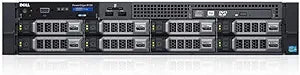
Dell PowerEdge R730 Server 768GB RAM 8X 4TB SAS (Renewed)
Dual E5-2630v3 octa-core processors and 768GB of DDR4 RAM give this renewed R730 enough memory headroom to run dozens of concurrent virtual machines without swap pressure.
View price on Amazon
Affiliate Disclosure: As an Amazon Associate, Studio Supplies earns from qualifying purchases made through links on this page, at no additional cost to you. This helps support our editorial team.
Notice a mistake? Let Us Know
Overview
Power Your Enterprise with the Renewed Dell PowerEdge R730 Server
The Dell PowerEdge R730 is a robust server designed to handle demanding workloads. This renewed server provides reliable performance with dual processors, ample memory, and extensive storage capacity. Ideal for businesses seeking a cost-effective and powerful server solution.
Specifications:
- Brand: Dell
- Model: PowerEdge R730
- Form Factor: 8 x 3.5" Hot Plug
- Processors: 2x E5-2630v3 Eight Core 2.4Ghz
- Memory: 768GB RAM
- Storage: 8x 4TB SAS Drives
- Drive Speed: 7.2K 6Gbps
- Raid Controller: H330 12Gbps
- Power Supplies: 2x 750W Redundant
- Optical Drive: DVD
- Condition: Renewed
Frequently Asked Questions
What processors are in this R730 and what workloads do they handle well?
Two Intel Xeon E5-2630v3 processors, each with 8 cores / 16 threads running at 2.4GHz base (Turbo to 3.2GHz), for a 16-core / 32-thread system total. The Haswell-EP architecture handles virtualization (VMware, Hyper-V), database query processing, and ERP/CRM workloads efficiently — it is not optimized for AVX-512 or AI inference workloads, which require Skylake-SP or newer silicon.
What does 768GB of RAM enable that a standard 128GB or 256GB configuration cannot?
At 768GB, this R730 can host large in-memory databases (SQL Server with a 300GB+ working set, SAP HANA small-scale), dozens of concurrent VMs with 8–16GB RAM allocations each, or a Kubernetes cluster where node memory pressure is never a bottleneck. This configuration eliminates memory as a planning constraint for most mid-enterprise workloads.
What RAID controller is included and what RAID levels does it support?
The H330 12Gbps SAS/SATA controller supports RAID 0, 1, 5, 10, and 50. Note that the H330 is an entry-tier Dell controller — it lacks a battery-backed write cache (BBWC), which means write performance under heavy I/O load is lower than the H730 or H730P controllers found in higher-spec R730 configurations.
What is the storage throughput on the 8x 4TB SAS 7.2K drives?
The 7.2K RPM 6Gbps SAS drives deliver approximately 140–180MB/s sequential read per spindle. In an 8-drive RAID 10 array, you can expect roughly 500–700MB/s aggregate sequential read. This is adequate for bulk storage and backup targets but is the throughput ceiling of the configuration — SSD tiering would be required for latency-sensitive database workloads.
What does "Renewed" mean for this unit and what warranty applies?
Renewed indicates the unit has been refurbished and tested by a third-party reseller. Component condition, testing standards, and warranty terms vary by seller — verify the specific warranty offered before purchase, as Dell's original warranty does not transfer on refurbished units sold by third parties.
Related Products


