Dell

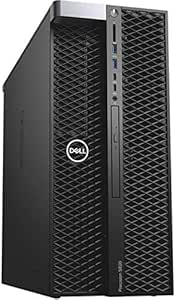
Dell Precision T5820 Xeon Renewed Workstation

The renewed Dell Precision T5820 pairs a Xeon processor with 256GB RAM and 1TB NVMe storage for professional workstation performance.

$2,610.00*
In Stock on Amazon.com
View on Amazon

*Price sourced from Amazon.com. Last updated:Jun 04, 2026.Price and availability are subject to change.

Affiliate Disclosure: Studio Supplies may earn a commission from qualifying purchases made through links on this page, at no additional cost to you. This helps support our editorial team.

Notice a mistake? Let Us Know

Overview

The Dell Precision Tower 5820 is a single-socket workstation platform that has earned a solid reputation in professional environments for its reliability, expandability, and support for enterprise-grade components. This renewed configuration comes equipped with an Intel Xeon W-2102, a quad-core processor clocked at 2.9GHz that delivers stable, workstation-certified performance. The standout specification here is the 256GB of RAM — an exceptional amount of memory that opens the door to running large virtual machine farms, working with massive datasets in memory, or handling complex engineering simulations that would overwhelm lesser machines.

Storage duties are handled by a 1TB NVMe M.2 SSD connected via a PCIe adapter card, providing fast read and write speeds for the operating system, applications, and active project files. The included DVDRW drive adds legacy optical media support. It is worth noting that the Nvidia NVS 310 with 512MB is strictly a multi-monitor display output card — users with GPU-dependent workflows will want to upgrade to a more capable graphics card, and the T5820's PCIe slots can accommodate professional GPUs. The 425W power supply may limit the tier of GPU you can install without a PSU swap. Running Windows 11, this renewed Precision T5820 is ideal for buyers who need an affordable entry into workstation-class hardware, particularly when the primary bottleneck is RAM rather than raw CPU clock speed or GPU compute.

Specifications

Processor
Intel Xeon W-2102 Quad Core 2.9GHz
Memory
256GB RAM
Storage
1TB NVMe M.2 SSD with PCIe Adapter Card
Optical Drive
DVDRW
Graphics
Nvidia NVS 310 512MB
Operating System
Windows 11
Power Supply
425W
Condition
Renewed

Pros & Cons

👍 Pros

  • Massive 256GB RAM capacity handles extremely memory-intensive workloads like large VMs and in-memory databases
  • 1TB NVMe M.2 SSD delivers fast boot and application load times via PCIe interface
  • Xeon W-2102 processor provides workstation-grade reliability with ECC memory support
  • Dell Precision T5820 chassis is well-built with tool-less interior access and excellent expandability
  • Renewed pricing offers professional workstation hardware at a fraction of the original cost

👎 Cons

  • The Xeon W-2102 is a quad-core chip at 2.9GHz with no turbo boost, limiting single-threaded performance
  • Nvidia NVS 310 with 512MB is a basic display adapter wholly inadequate for GPU-intensive tasks
  • The 425W power supply restricts the ability to install high-performance graphics cards
  • Being a renewed unit, it may have cosmetic imperfections and a shorter warranty than new hardware
  • The W-2102 is a Sandy Bridge-era Xeon architecture, well behind current-generation processors in IPC

Frequently Asked Questions

Renewed means the workstation has been professionally inspected, tested, and restored to working condition. It may show minor cosmetic wear but is fully functional.
The Xeon W-2102 is a quad-core workstation chip running at 2.9GHz, designed for reliability and compatibility with ECC memory in professional applications like CAD, simulation, and data processing.
No — the NVS 310 with 512MB is a basic display adapter designed for multi-monitor office use and 2D tasks, not 3D rendering or gaming. A GPU upgrade would be needed for those workloads.
Yes, it includes a DVDRW drive for reading and writing CDs and DVDs.
The T5820 platform supports large memory configurations. This particular unit ships with 256GB, which is very generous and suitable for memory-heavy applications like large datasets, virtual machines, or in-memory databases.