



Dell
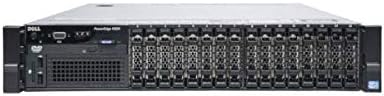
Dell R820-H710-4650V2-128GB-7.32TB-1R-0B PowerEdge Server 2x E5-4650 V2 (Renewed)
Dual 10-core Xeon E5-4650 v2 CPUs and 128GB DDR3 RAM give this renewed PowerEdge R820 genuine enterprise compute density at a fraction of new-server pricing.
View price on Amazon
Affiliate Disclosure: As an Amazon Associate, Studio Supplies earns from qualifying purchases made through links on this page, at no additional cost to you. This helps support our editorial team.
Notice a mistake? Let Us Know
Overview
Unleash Enterprise Power with Dell PowerEdge R820
The Dell PowerEdge R820 is a robust server designed for demanding workloads and enterprise-level applications. Equipped with dual Intel Xeon processors, ample memory, and extensive storage options, this renewed server delivers exceptional performance and reliability.
- System: Dell PowerEdge R820 16 Bays 2.5 Server
- Processors: 2x Intel Xeon E5-4650 v2 10 Core 2.4Ghz
- Memory: 128GB DDR3 MEMORY
- Hard Drives: 2x 960GB SATA SSD
Key Features
Dell PowerEdge R820 16 Bays 2.5 Server
2x Intel Xeon E5-4650 v2 10 Core 2.4Ghz
128GB DDR3 MEMORY
H710 512MB Controller
2x 960GB SATA SSD | 5.4TB (6x NEW 900GB SAS)
Frequently Asked Questions
What is the total CPU core count and clock speed profile of this R820 configuration?
The R820 ships with two Intel Xeon E5-4650 v2 processors, each with 10 cores at a 2.4GHz base clock with Turbo Boost headroom. Combined, that is 20 physical cores and 40 logical threads via Hyper-Threading — a meaningful parallel processing capacity for virtualization, database, or batch processing workloads.
What is the total raw compute capacity of this server's two Xeon E5-4650 v2 processors?
Each E5-4650 v2 is a 10-core chip at 2.4GHz base with Hyper-Threading, giving 20 physical cores and 40 logical threads across both sockets. That thread count supports heavy virtualization workloads, multi-tenant databases, and parallel processing tasks that would saturate a dual-socket mainstream Xeon configuration.
What storage configuration does this server ship with?
The server includes two 960GB SATA SSDs and six new 900GB SAS HDDs (totaling approximately 7.32TB combined raw storage). The H710 RAID controller with 512MB cache manages both SSD and SAS pools, allowing tiered or RAID-protected configurations.
What is the memory configuration, and is it ECC?
The system ships with 128GB of DDR3 RAM. Server-class Xeon E5-4600 v2 platforms use ECC (Error-Correcting Code) memory as standard — ECC status should be confirmed with the seller, but the R820 platform is designed to operate exclusively with ECC-registered DDR3 DIMMs.
What does the H710 512MB controller support, and does it affect which RAID levels are available?
The H710 512MB RAID controller supports RAID levels 0, 1, 5, 6, 10, 50, and 60. The 512MB cache improves write performance significantly versus a no-cache or small-cache RAID controller. A battery-backed unit (BBU) status should be confirmed with the seller, as the BBU enables write-back caching.
What memory capacity does this server support beyond the included 128GB?
The R820 supports up to 1.5TB of DDR3 RAM across its 48 DIMM slots (24 per socket). The current 128GB configuration leaves substantial headroom for expansion if future workloads require more memory-resident data.
Is this server rack-mountable, and what rack depth is required?
The PowerEdge R820 is a standard 2U rack server designed for 19-inch server racks. Its depth is substantial — Dell R820 chassis are approximately 29 inches deep — so rack depth should be confirmed before purchasing for shallow or mid-depth racks.
How many drive bays does the R820 have, and what drives are currently installed?
The R820 chassis supports 16 x 2.5-inch hot-swap drive bays. The listed configuration includes 2x 960GB SATA SSD and 6x NEW 900GB SAS HDDs — totaling approximately 7.32TB of raw storage across the installed drives.
What are the realistic workload use cases for this server in 2024?
The R820 with 20 cores and 128GB RAM is well-suited for virtualization hosts (VMware ESXi, Proxmox), database servers (MSSQL, PostgreSQL), development environments, and private cloud infrastructure. As a renewed platform, it offers enterprise-grade redundancy (dual PSU, ECC RAM, hot-swap drives) at significantly reduced capital cost versus current-generation hardware.
What does 'renewed' mean for this server, and what warranty applies?
Renewed indicates the server has been inspected and tested but is not factory new. Individual seller warranties vary — this listing should be checked for specific coverage terms. Enterprise servers often have Dell ProSupport options available separately if long-term coverage is needed.
Related Products


