

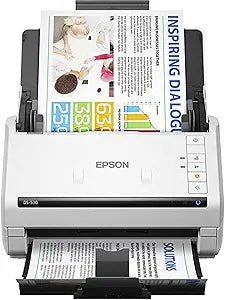
Epson
Epson DS-530 High-Speed Color Duplex Document Scanner
Streamline Your Workflow with the Epson DS-530 Document Scanner Optimize your document management with the Epson DS-530 Document Scanner. This efficient and reliable scanner offers rapid color duplex scanning at speeds up to 35 ppm/70 ipm. With TWAIN and ISIS drivers, it seamlessly integrates int...
$391.00*
View on Amazon
✓ In Stock on Amazon.com
*Price sourced from Amazon.com. Last updated:Oct 09, 2026.Price and availability are subject to change — details.
Affiliate Disclosure: As an Amazon Associate, Studio Supplies earns from qualifying purchases made through links on this page, at no additional cost to you. This helps support our editorial team.
Notice a mistake? Let Us Know
Overview
Streamline Your Workflow with the Epson DS-530 Document Scanner
Optimize your document management with the Epson DS-530 Document Scanner. This efficient and reliable scanner offers rapid color duplex scanning at speeds up to 35 ppm/70 ipm. With TWAIN and ISIS drivers, it seamlessly integrates into existing document management systems, making it an ideal choice for businesses looking to enhance productivity.
Specifications:
- Brand: Epson
- Model: DS-530
- Scan Speed: 35 ppm/70 ipm
- Duplex Scanning: Yes (Color)
- Interface: TWAIN and ISIS Drivers
- Duty Cycle: 4000 Sheets Daily
- ADF Capacity: 50 Pages
- Minimum Paper Size: 2 inch x 2 inch
- Maximum Paper Size: 8.5 inch x 240 inch
Key Features
Product_Type - Scanners-Sheetfed
Scan_Size_W_X_H - 8.5" x 14"
Color_Bit_Depth - 30-bit
Grayscale_Bit_Depth - 24-bit
Connector/port/interface - USB 2.0
Specifications
Product Type
Document Scanner
Scanning Capability
High-Speed Color Duplex
Product Condition
Refurbished
Refurbishing Process
Functionality testing, basic cleaning, inspection, repackaging
Included Accessories
All relevant accessories
Packaging
May arrive in a generic box
Frequently Asked Questions
What does "Refurbished" mean for this Epson DS-530 scanner?
A refurbished product like this Epson DS-530 is tested and certified to look and work like new, undergoing functionality testing, cleaning, inspection, and repackaging.
Does this scanner support scanning both sides of a document?
Yes, the Epson DS-530 is a High-Speed Color Duplex Document Scanner, meaning it can scan both sides of a document in one pass.
Can this scanner capture documents in color?
Yes, it is capable of performing color document scanning, preserving the original color of your documents.
Are all accessories included with the refurbished scanner?
Yes, the refurbished product ships with all relevant accessories needed for its operation.
What is the primary benefit of a duplex scanner?
The main benefit of a duplex scanner is its ability to scan both sides of a page simultaneously, significantly speeding up the document digitization process.
Related Products


