

EVGA
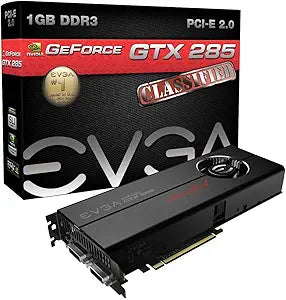
EVGA GeForce GTX285 Classified 1GB DDR3 Graphics Card
Unleash High-Performance GraphicsExperience gaming and visual applications like never before with the EVGA GeForce GTX 285 Classified Edition Graphics Card. Boasting 1GB of DDR3 memory and PCI Express 2.0 support, this card delivers exceptional performance and visual fidelity.Specifications: Bra...
Check availability
Affiliate Disclosure: As an Amazon Associate, Studio Supplies earns from qualifying purchases made through links on this page, at no additional cost to you. This helps support our editorial team.
Notice a mistake? Let Us Know
Overview
Unleash High-Performance Graphics
Experience gaming and visual applications like never before with the EVGA GeForce GTX 285 Classified Edition Graphics Card. Boasting 1GB of DDR3 memory and PCI Express 2.0 support, this card delivers exceptional performance and visual fidelity.
Specifications:
- Brand: EVGA
- Model: 01G-P3-1190-TR
- Core Clock: 675 MHz
- Memory: 1 GB DDR3 SDRAM
- Interface: PCI Express 2.0 x16
- Memory Clock: 2538 MHz
- Maximum Resolution: 2560 x 1600
- Multi-GPU Support: SLI
- Outputs: DVI
Key Features
GeForce GTX 285 Classified Edition with 675MHz clock
PCI Express 2.0
1024 MB 512-bit .8ns DDR3 memory
2538MHz memory clock and 1548MHz shader clock
The world's first 4-way SLI card
Specifications
Brand
EVGA
Model
GeForce GTX285 Classified Edition
GPU Clock Speed
675MHz
Memory
1024 MB DDR3
Memory Bus
512-bit
Memory Speed
.8ns
Memory Clock
2538MHz
Shader Clock
1548MHz
Interface
PCI Express 2.0
SLI Support
4-way SLI
Frequently Asked Questions
What games can I play with the EVGA GeForce GTX285 Classified 1GB DDR3 Graphics Card?
This card is suitable for playing older PC games from its era (late 2000s to early 2010s) at moderate settings, but it will struggle with modern AAA titles due to its older architecture and limited memory.
Is this graphics card compatible with modern motherboards that use PCI Express 3.0 or 4.0?
While the card uses PCI Express 2.0, it is generally backward compatible with PCI Express 3.0 and 4.0 slots, though it will operate at its native PCIe 2.0 speed.
What are the power requirements for the EVGA GeForce GTX285 Classified graphics card?
The product details do not specify the exact power requirements, but a high-end card of this generation typically requires significant power, often needing multiple PCIe power connectors.
Can this graphics card support multiple monitors?
Graphics cards of this era generally support multiple monitors, often through DVI or HDMI outputs, though the specific port configuration is not detailed in the provided information.
What is the benefit of the 4-way SLI capability on this GTX285 Classified card?
The 4-way SLI capability allowed for combining the power of four identical graphics cards to achieve higher performance in compatible applications and games, though this technology is less common and supported today.
Related Products


