

EVGA
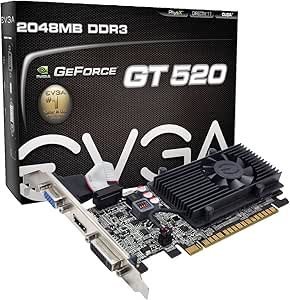
EVGA 02G-P3-1529-KR GeForce GT 520 2GB Graphics Card
Entry-Level Graphics with the EVGA GeForce GT 520 The EVGA GeForce GT 520 offers a basic graphics solution for everyday computing. With 2GB of DDR3 memory and support for DVI, HDMI, and VGA outputs, this card is suitable for older systems or users needing basic display capabilities. Specificatio...
Check availability
Affiliate Disclosure: As an Amazon Associate, Studio Supplies earns from qualifying purchases made through links on this page, at no additional cost to you. This helps support our editorial team.
Notice a mistake? Let Us Know
Overview
Entry-Level Graphics with the EVGA GeForce GT 520
The EVGA GeForce GT 520 offers a basic graphics solution for everyday computing. With 2GB of DDR3 memory and support for DVI, HDMI, and VGA outputs, this card is suitable for older systems or users needing basic display capabilities.
Specifications:
- Core Clock: 810 MHz
- Memory Clock: 1000MHz Effective
- Shader Clock: 1620 MHz
- CUDA Cores: 48
- Bus Type: PCI-E 2.0
- Memory Detail: 2048MB DDR3
- Memory Bit Width: 64 Bit
- Memory Bandwidth: 8 GB/sec
- Texture Fill Rate: 6.5 GT/s
Key Features
Microsoft DirectX 11 Support
1000 MHz Effective Memory Clock and 1620 MHz Shader Clock
2048 MB 64-bit DDR3 Memory
PCI Express 2.0
GeForce GT 520 with 810 MHz core clock
GeForce GT 520 with 810 MHz core clock
PCI Express 2.0
2048 MB 64-bit DDR3 Memory
1000 MHz Effective Memory Clock and 1620 MHz Shader Clock
Microsoft DirectX 11 Support
Blu-ray 3D Support
Specifications
GPU Model
GeForce GT 520
Core Clock
810 MHz
Memory
2048 MB DDR3
Memory Interface
64-bit
Effective Memory Clock
1000 MHz
Shader Clock
1620 MHz
Interface
PCI Express 2.0
DirectX Support
DirectX 11
Blu-ray Support
Blu-ray 3D
Frequently Asked Questions
What graphics processor does this EVGA card utilize?
This EVGA card uses the GeForce GT 520 graphics processor, with an 810 MHz core clock.
How much memory is on this graphics card?
It features 2048 MB of 64-bit DDR3 memory, providing dedicated video memory for graphics tasks.
Does this graphics card support modern DirectX versions?
Yes, it comes with Microsoft DirectX 11 support, which is compatible with a range of applications.
What is the effective memory clock speed of the EVGA 02G-P3-1529-KR?
The effective memory clock speed for this graphics card is 1000 MHz.
Is this graphics card compatible with 3D Blu-ray content?
Yes, the card includes Blu-ray 3D support, allowing for playback of 3D Blu-ray movies.
What type of PCI Express slot does this graphics card require?
This card is designed to connect through a PCI Express 2.0 slot on your motherboard.
Related Products


