

EVGA
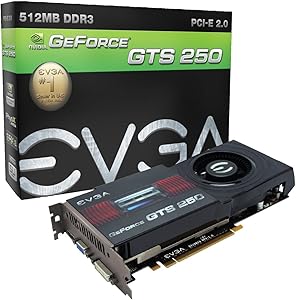
EVGA 512-P3-1154-TR GeForce GTS 250 512MB DDR3 Graphics Card
Reliable Graphics Performance for Everyday Computing The EVGA GeForce GTS 250 graphics card delivers solid performance for everyday computing and gaming. With 512 MB of DDR3 memory and support for PCI Express 2.0, this card provides a smooth and responsive experience for a variety of application...
Check availability
Affiliate Disclosure: As an Amazon Associate, Studio Supplies earns from qualifying purchases made through links on this page, at no additional cost to you. This helps support our editorial team.
Notice a mistake? Let Us Know
Overview
Reliable Graphics Performance for Everyday Computing
The EVGA GeForce GTS 250 graphics card delivers solid performance for everyday computing and gaming. With 512 MB of DDR3 memory and support for PCI Express 2.0, this card provides a smooth and responsive experience for a variety of applications. Equipped with HDMI, DVI, and VGA outputs, it offers versatile connectivity options for your display needs.
Specifications:
- Brand: EVGA
- Model: GeForce GTS 250
- Memory: 512 MB DDR3 SDRAM
- Core Clock: 738 MHz
- Memory Clock: 2200 MHz
- Interface: PCI Express 2.0 x16
- Maximum Resolution: 2560 x 1600
- Outputs: HDMI, DVI, VGA
- Features: SLI Support
Key Features
PCI Express 2.0, HDMI, DVI-I, and VGA interfaces
GeForce GTS 250 with 738 MHz core clock
512 MB of DDR3 memory
2200 MHz memory clock and 1782 MHz shader clock
Full DirectX 10 Shader model 4.0 and Open GL 3.1 Support
Specifications
Brand
EVGA
Model
512-P3-1154-TR
GPU
GeForce GTS 250
Core Clock
738 MHz
Video Memory
512MB DDR3
Memory Clock
2200 MHz
Shader Clock
1782 MHz
Interface
PCI Express 2.0
Video Outputs
HDMI, DVI-I, VGA
DirectX Support
DirectX 10 Shader model 4.0
OpenGL Support
Open GL 3.1
Frequently Asked Questions
What type of video memory does the EVGA GeForce GTS 250 graphics card have?
The EVGA GeForce GTS 250 graphics card is equipped with 512 MB of DDR3 memory.
What kind of interface does this graphics card use to connect to the motherboard?
It connects via a PCI Express 2.0 interface.
What display output options are available on this card?
This graphics card offers versatile connectivity with HDMI, DVI-I, and VGA interfaces.
Does this card support modern DirectX versions?
It supports Full DirectX 10 Shader model 4.0, but not later versions like DirectX 11 or 12.
What is the core clock speed of the GeForce GTS 250 GPU?
The GeForce GTS 250 GPU on this card operates with a core clock speed of 738 MHz.
Related Products


