

Gigabyte
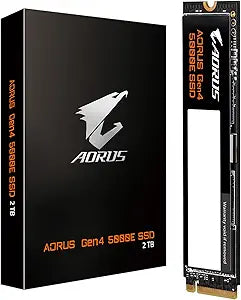
Gigabyte AG450E2TB-G AORUS 2TB SSD: PCIe 4.0 NVMe M.2 High Speed
2TB SSD
Experience Next-Gen Storage PerformanceThe GIGABYTE AORUS Gen4 5000E SSD 2TB delivers lightning-fast read and write speeds, making it ideal for gaming, content creation, and demanding applications. Upgrade your system with this high-performance NVMe M.2 solid-state drive. Form Factor: M.2 2...
$86.99*
Check availability
*Price sourced from Amazon.com. Last updated:Aug 28, 2026.Price and availability are subject to change — details.
Affiliate Disclosure: As an Amazon Associate, Studio Supplies earns from qualifying purchases made through links on this page, at no additional cost to you. This helps support our editorial team.
Notice a mistake? Let Us Know
Overview
Experience Next-Gen Storage Performance
The GIGABYTE AORUS Gen4 5000E SSD 2TB delivers lightning-fast read and write speeds, making it ideal for gaming, content creation, and demanding applications. Upgrade your system with this high-performance NVMe M.2 solid-state drive.
- Form Factor: M.2 2280.
- Interface: PCI-Express 4.0x4, NVMe 1.4.
- Total Capacity: 2000GB (2TB).
- Sequential Read Speed: Up to 6,500 MB/s.
- Sequential Write Speed: Up to 6,000 MB/s.
- Features: HMB (Host Memory Buffer) support, TRIM & S.M.A.R.T support.
Key Features
Form Factor: M.2 2280
Interface: PCI-Express 4.0x4, NVMe 1.4
Total Capacity: 2000GB (2TB)
Sequential Read Speed : up to 6,500 MB/s
Sequential Write speed : up to 6,000 MB/s
HMB (Host Memory Buffer) support, TRIM & S.M.A.R.T support
Specifications
Brand
Gigabyte
Model
AG450E2TB-G AORUS
Form Factor
M.2 2280
Interface
PCI-Express 4.0x4, NVMe 1.4
Capacity
2000GB (2TB)
Sequential Read Speed
up to 6,500 MB/s
Sequential Write Speed
up to 6,000 MB/s
Features
HMB support, TRIM & S.M.A.R.T support
Frequently Asked Questions
What does the "M.2 2280" form factor signify for this SSD?
The M.2 2280 form factor refers to the physical dimensions of the SSD, meaning it is 22mm wide and 80mm long, a common size for compact internal storage.
Will this Gigabyte AORUS SSD work in a system with PCIe 3.0?
While it utilizes a PCI-Express 4.0x4 interface, it should be backward compatible with PCIe 3.0 slots, though its speeds will be limited by the PCIe 3.0 interface's capabilities.
What is the benefit of the 2TB total capacity in the AORUS AG450E2TB-G?
A 2TB capacity provides substantial storage space, suitable for operating systems, numerous games, large applications, and extensive media files without frequent data management.
How does HMB (Host Memory Buffer) support improve the SSD's performance?
HMB support allows the SSD to use a portion of the system's DRAM as a cache, which can enhance performance, particularly in SSDs that do not have their own dedicated DRAM.
Does this SSD require any special drivers to function at its specified speeds?
The SSD uses the NVMe 1.4 protocol, which is typically supported by modern operating systems directly, often eliminating the need for separate, specific drivers to achieve its advertised speeds.
Related Products


