

Gigabyte
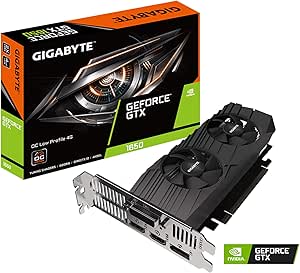
Gigabyte GV-N1656OC-4GL GTX 1650 D6 OC Low Profile Graphics Card
Compact Power for Gaming and Creation The Gigabyte GeForce GTX 1650 D6 OC Low Profile 4G Graphics Card is a versatile solution for gamers and content creators seeking a balance between performance and size. Its low profile design ensures compatibility with a wide range of systems. Specifications...
$384.90*
Check availability
*Price sourced from Amazon.com. Last updated:Sep 12, 2026.Price and availability are subject to change — details.
Affiliate Disclosure: As an Amazon Associate, Studio Supplies earns from qualifying purchases made through links on this page, at no additional cost to you. This helps support our editorial team.
Notice a mistake? Let Us Know
Overview
Compact Power for Gaming and Creation
The Gigabyte GeForce GTX 1650 D6 OC Low Profile 4G Graphics Card is a versatile solution for gamers and content creators seeking a balance between performance and size. Its low profile design ensures compatibility with a wide range of systems.
Specifications:
- Powered by GeForce GTX 1650
- NVIDIA Turing Architecture
- GeForce Experience
- Memory: 4GB GDDR6 128-bit
- Low Profile Design (167mm card length)
- Supports up to 4 displays
- Card Size: 170 mm compact
- Core Clock: 1620 MHz
Key Features
Powered by GeForce GTX 1650
NVIDIA Turing architecture and GeForce Experience
Integrated with 4GB GDDR6 128bit memory interface
Low profile design with 167mm card length.Avoid using unofficial software
Supports up to 4 displays
170 mm compact card size
Core Clock: 1620 Mhz
Specifications
GPU Architecture
NVIDIA Turing
Video Memory
4GB GDDR6
Memory Interface
128-bit
Core Clock
1620 MHz
Card Length
167mm
Display Support
Up to 4 displays
Card Size
170 mm (compact)
Frequently Asked Questions
What is the benefit of the low profile design of this graphics card?
The low profile design with a 167mm card length makes this graphics card suitable for compact PC builds and smaller cases where space is limited.
How many displays can this graphics card support at one time?
This Gigabyte GTX 1650 D6 OC graphics card is designed to support up to four displays simultaneously, offering flexibility for multi-monitor configurations.
What type of memory is integrated into this graphics card?
This graphics card is integrated with 4GB of GDDR6 memory with a 128-bit memory interface, contributing to its graphical processing capabilities.
What is the core clock speed of this graphics card?
The Gigabyte GV-N1656OC-4GL GTX 1650 D6 OC Low Profile Graphics Card has a core clock speed of 1620 MHz, providing its operational frequency.
Does this graphics card utilize NVIDIA's latest architecture?
This card is powered by the NVIDIA Turing architecture, which is known for its efficiency in graphics processing and features like GeForce Experience.
Is there any specific software caution mentioned for this product?
The product features advise avoiding the use of unofficial software to ensure optimal performance and stability of the graphics card.
Related Products


