

Gigabyte
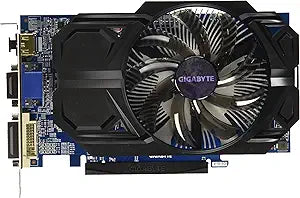
Gigabyte GV-R725OC-2GI: Radeon R7 250 2GB DDR3 Overclocked Graphics Card
Enhance Your Gaming with the Gigabyte Radeon R7 250 Overclocked Graphics Card The Gigabyte Radeon R7 250 is an overclocked graphics card designed to deliver enhanced gaming performance and visual experiences. Featuring 2GB of DDR3 memory, a custom-designed cooler, and durable components, this car...
Check availability
Affiliate Disclosure: As an Amazon Associate, Studio Supplies earns from qualifying purchases made through links on this page, at no additional cost to you. This helps support our editorial team.
Notice a mistake? Let Us Know
Overview
Enhance Your Gaming with the Gigabyte Radeon R7 250 Overclocked Graphics Card
The Gigabyte Radeon R7 250 is an overclocked graphics card designed to deliver enhanced gaming performance and visual experiences. Featuring 2GB of DDR3 memory, a custom-designed cooler, and durable components, this card provides reliable and quiet operation for your gaming rig.
Specifications:
- GPU: AMD Radeon R7 250 (Oland)
- Memory: 2048 MB DDR3
- Memory Interface: 128-bit
- Clock Speed: Overclocked to 1100 MHz
- Cooler: Custom Designed 10cm Cooler
Key Features
Powered by AMD Radeon R7 250 GPU (Oland)
Integrated with the first 2048MB DDR3 memory and 128-bit memory interface
OC Edition - Core Clock:1100 MHz (Std 1050 MHz)
Dual-Link DVI-D / HDMI / D-Sub
Support PCI Express 3.0 x8 bus interface
Specifications
Brand
Gigabyte
Model Name
GV-R725OC-2GI
GPU
AMD Radeon R7 250 (Oland)
Memory
2048MB DDR3
Memory Interface
128-bit
Core Clock (OC Edition)
1100 MHz
Standard Core Clock
1050 MHz
Output Ports
Dual-Link DVI-D, HDMI, D-Sub
Bus Interface
PCI Express 3.0 x8
Frequently Asked Questions
What GPU powers the Gigabyte GV-R725OC-2GI graphics card?
The Gigabyte GV-R725OC-2GI graphics card is powered by the AMD Radeon R7 250 GPU, specifically the Oland variant.
How much memory does this graphics card have?
This graphics card is integrated with 2048MB (2GB) of DDR3 memory.
Is the core clock of this card higher than the standard Radeon R7 250?
Yes, this is an OC Edition, featuring a core clock of 1100 MHz, which is higher than the standard 1050 MHz.
What display outputs are available on this card?
The Gigabyte GV-R725OC-2GI provides Dual-Link DVI-D, HDMI, and D-Sub outputs for connecting to various displays.
What bus interface does this graphics card utilize?
This graphics card supports the PCI Express 3.0 x8 bus interface for connecting to your motherboard.
Related Products


