

Gigabyte
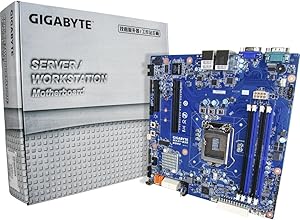
Gigabyte MX31-BS0 microATX Server Motherboard
Build a Reliable Server with this High-Quality MotherboardThe Gigabyte MX31-BS0 Server Motherboard offers a robust foundation for building a reliable and efficient server. With its Intel C232 Express Chipset, DDR4 support, and multiple connectivity options, this motherboard is designed for demand...
$185.50*
Check availability
*Price sourced from Amazon.com. Last updated:Sep 15, 2026.Price and availability are subject to change — details.
Affiliate Disclosure: As an Amazon Associate, Studio Supplies earns from qualifying purchases made through links on this page, at no additional cost to you. This helps support our editorial team.
Notice a mistake? Let Us Know
Overview
Build a Reliable Server with this High-Quality Motherboard
The Gigabyte MX31-BS0 Server Motherboard offers a robust foundation for building a reliable and efficient server. With its Intel C232 Express Chipset, DDR4 support, and multiple connectivity options, this motherboard is designed for demanding server applications.
- Chipset: Intel C232 Express
- Socket: LGA 1151
- Form Factor: MicroATX
- Memory: 1.2V DDR4
- LAN: 2xGbE LAN
- SATA: 6xSATA3
- M.2: 1x M.2
Key Features
microdata form factor
Intel Xeon processors E3-1200 V6/V5 product family
Intel C232 Express Chipset
4 x UDIMM slots, DDR4 2400MHz
2 x Gbe LAN ports (Intel I210)
Specifications
Form Factor
microATX
Processor Support
Intel Xeon processors E3-1200 V6/V5 product family
Chipset
Intel C232 Express Chipset
Memory Slots
4 x UDIMM slots
Memory Type
DDR4
Memory Speed
2400MHz
LAN Ports
2 x Gbe LAN ports (Intel I210)
Frequently Asked Questions
What kind of processors are compatible with the Gigabyte MX31-BS0 motherboard?
This motherboard is designed to support Intel Xeon processors from the E3-1200 V6/V5 product family, providing enterprise-level performance and reliability.
What is the form factor of this motherboard, and why is it relevant?
The Gigabyte MX31-BS0 has a microATX form factor, which means it is a more compact size, suitable for smaller server chassis or environments where space is a premium.
How many memory slots does this motherboard have, and what type of RAM does it use?
It features 4 UDIMM slots and supports DDR4 memory with speeds up to 2400MHz, which is important for server stability and performance.
Does this motherboard offer network redundancy?
Yes, it comes equipped with two Gbe LAN ports, powered by Intel I210 controllers, which can provide network redundancy or increased bandwidth for server applications.
What chipset does the Gigabyte MX31-BS0 motherboard utilize?
The motherboard is built around the Intel C232 Express Chipset, offering a robust and stable foundation for a server system.
Related Products


