
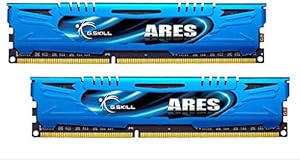
G.Skill
G.Skill F3-1866C9D-8GAB 8GB (2x4GB) DDR3 1866 Desktop Memory
High-Performance Memory for Enhanced ComputingThe G.Skill Ares Series DDR3 SDRAM delivers fast and reliable performance for your desktop, ensuring smooth multitasking and responsive computing. Capacity: 8GB (2 x 4GB) Type: 240-Pin DDR3 SDRAM Speed: DDR3 1866 (PC3 14900) Cas Latency: 9 Timing...
Check availability
Affiliate Disclosure: As an Amazon Associate, Studio Supplies earns from qualifying purchases made through links on this page, at no additional cost to you. This helps support our editorial team.
Notice a mistake? Let Us Know
Overview
High-Performance Memory for Enhanced Computing
The G.Skill Ares Series DDR3 SDRAM delivers fast and reliable performance for your desktop, ensuring smooth multitasking and responsive computing.
- Capacity: 8GB (2 x 4GB)
- Type: 240-Pin DDR3 SDRAM
- Speed: DDR3 1866 (PC3 14900)
- Cas Latency: 9
- Timing: 9-10-9
- Voltage: 1.5V
- ECC: No
- Buffered/Registered: Unbuffered
- Multi-channel Kit: Dual Channel Kit
Key Features
DDR3 1866 (PC3 14900)
Timing 9-10-9-28
Cas Latency 9
Voltage 1.5V
Specifications
Memory Type
DDR3
Speed
1866 MHz (PC3 14900)
Capacity
8GB (2 x 4GB)
Timing
9-10-9-28
CAS Latency
9
Voltage
1.5V
Form Factor
Desktop Memory
Frequently Asked Questions
Is this G.Skill memory kit compatible with motherboards that support DDR4 RAM?
No, this G.Skill F3-1866C9D-8GAB memory kit is DDR3, meaning it is only compatible with motherboards designed to use DDR3 memory. DDR4 slots are physically different and electrically incompatible.
What does a CAS Latency of 9 mean for performance?
A CAS Latency of 9 indicates the delay between the memory controller requesting data and the data being available from the memory module, with lower numbers generally signifying faster response times in certain operations.
Can I use just one of the 4GB modules from this kit?
Yes, you can use a single 4GB module, but utilizing both modules together typically allows for dual-channel memory operation, which can enhance overall system performance by increasing memory bandwidth.
Is the 1.5V voltage standard for DDR3 1866MHz memory?
A voltage of 1.5V is a common operating voltage for DDR3 memory modules, including those running at 1866MHz, balancing performance with power consumption.
What is the benefit of a 1866MHz clock speed for desktop memory?
A 1866MHz clock speed provides a higher data transfer rate compared to slower DDR3 modules, which can contribute to smoother multitasking and faster application loading in compatible systems.
Related Products


