
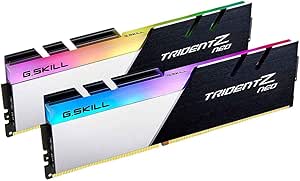
G.Skill F4-3200C14D-16GTZN Trident Z Neo 16GB DDR4 RGB RAM
Elevate Your System with G.Skill Trident Z Neo RGB DDR4 Memory The G.Skill Trident Z Neo Series DDR4 memory is engineered for optimal performance and compatibility with the latest AMD Ryzen platforms. Featuring vibrant RGB lighting and high-speed operation, this memory enhances both the aesthetic...
*Price sourced from Amazon.com. Last updated:Oct 22, 2026.Price and availability are subject to change — details.
Notice a mistake? Let Us Know
Overview
Elevate Your System with G.Skill Trident Z Neo RGB DDR4 Memory
The G.Skill Trident Z Neo Series DDR4 memory is engineered for optimal performance and compatibility with the latest AMD Ryzen platforms. Featuring vibrant RGB lighting and high-speed operation, this memory enhances both the aesthetics and performance of your gaming PC or workstation.
- Series: Trident Z Neo (for AMD Ryzen)
- Capacity: 16GB (2 x 8GB)
- Memory Type: DDR4 SDRAM
- Pin Count: 288-Pin
- Speed: 3200MHz
- RGB Lighting: Yes
Specifications
Frequently Asked Questions
Related Products


