



HP
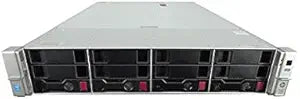
HP DL380G9-P240-2695V4-192GB-32TB-0R-0B 4-Bay 3.5" Server, Dual Xeon E5-2695 V4 (Renewed)
192GB DDR4
Thirty-six cores, 192GB of ECC RAM, and 32TB of SAS storage — this renewed DL380 G9 is a serious compute and storage platform at a fraction of new-iron pricing.
View price on Amazon
Affiliate Disclosure: As an Amazon Associate, Studio Supplies earns from qualifying purchases made through links on this page, at no additional cost to you. This helps support our editorial team.
Notice a mistake? Let Us Know
Overview
Unleash Powerful Performance with the HP DL380 G9 Server
Experience exceptional processing power and storage capacity with the HP DL380 G9 4-Bay 3.5" Server. This robust server is equipped with dual Intel Xeon E5-2695 V4 processors, ample DDR4 RAM, and high-speed SAS storage, making it an ideal solution for demanding workloads and data-intensive applications.
Specifications:
- System: HP DL380 G9 4-Bay 3.5 Server
- Processors: 2x Intel Xeon E5-2695 V4 18-Core 2.1Ghz
- Memory: 192GB DDR4 REG RAM
- Hard Drives: 32TB (4x 8TB SAS 12Gb/s 3.5")
- Controller: HPE Smart Array P240 12Gb/s
Key Features
HP DL380 G9 4-Bay 3.5 Server
2x Intel Xeon E5-2695 V4 18-Core 2.1Ghz
192GB DDR4 REG RAM
HPE Smart Array P240 12Gb/s
32TB (4x 8TB SAS 12Gb/s 3.5")
Frequently Asked Questions
What is the aggregate core and thread count across both processors?
The dual E5-2695 V4 configuration delivers 36 physical cores and 72 threads total. Each E5-2695 V4 is an 18-core, 36-thread processor running at 2.1 GHz base with Turbo Boost up to 3.3 GHz. For workloads that scale across threads — virtualization, parallel compilation, large database queries — this is a substantial compute pool.
What RAID configurations does the HPE Smart Array P240 controller support?
The P240 supports RAID 0, 1, 5, 6, 10, 50, and 60. With four 8TB SAS drives installed, RAID 6 gives you 16TB of usable space with double-drive fault tolerance, while RAID 10 gives you 16TB with better random I/O performance and single-drive fault tolerance per mirrored pair. The P240's 12Gb/s SAS interface eliminates the controller as a bottleneck for the installed drives.
Is the 192GB of RAM ECC, and can it be expanded?
Yes, the DL380 G9 uses DDR4 Registered ECC (RDIMM) memory. The platform supports up to 768GB across 24 DIMM slots, so there is substantial headroom beyond the 192GB installed here. ECC is essential for server workloads — it detects and corrects single-bit memory errors that would cause silent data corruption or crashes in a standard non-ECC system.
What does "Renewed" mean for a server at this spec level?
This unit has been tested and certified to work as expected. Renewed enterprise hardware at this tier typically undergoes more rigorous validation than consumer renewed products because the failure modes are more consequential. Verify what specific testing and certification the seller performed, and factor the warranty terms into your deployment decision.
What workloads is this server configuration best suited for?
The 36-core CPU count and 192GB RAM ceiling make this well-suited for VMware/Hyper-V virtualization hosts (running 20–40+ VMs depending on workload), large SQL Server or PostgreSQL instances, Hadoop/Spark nodes, or NAS/backup targets where the 32TB raw storage capacity is the primary value.
Related Products


