



HP
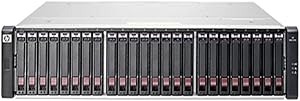
HP E7V99A Modular Smart Array 1040 Dual Controller Storage (Renewed)
Dual-controller SAN architecture delivers redundant storage performance for SMB environments that can't afford a single point of failure.
View price on Amazon
Affiliate Disclosure: As an Amazon Associate, Studio Supplies earns from qualifying purchases made through links on this page, at no additional cost to you. This helps support our editorial team.
Notice a mistake? Let Us Know
Overview
HP Modular Smart Array 1040: Reliable Storage Solution
The HP E7V99A Modular Smart Array 1040 provides a cost-effective and reliable storage solution for small to medium-sized businesses. Featuring dual controllers, it offers enhanced performance and data protection. This renewed hard drive array is professionally inspected and tested to ensure it works like new, providing peace of mind for your critical data.
Specifications:
- Type: Hard Drive Array
- Controllers: Dual Controller
- Form Factor: LFF (Large Form Factor)
Key Features
Type
SAN Array
Form Factor
Rack-mountable
Frequently Asked Questions
What does "dual controller" mean for uptime, and how does it differ from a single-controller array?
With dual controllers, the MSA 1040 can continue operating if one controller fails — the surviving controller takes over I/O without data loss or a manual restart. A single-controller array has no such failover path; a controller failure means the storage is offline until hardware is replaced. For any environment running production workloads, the dual-controller configuration is the meaningful differentiator.
What host interface does the MSA 1040 use, and what switches or HBAs are required?
The MSA 1040 is available in iSCSI or Fibre Channel variants (the specific interface depends on the unit configuration). iSCSI variants connect over standard Ethernet infrastructure (1GbE or 10GbE) using software or hardware iSCSI initiators; FC variants require Fibre Channel HBAs in the host servers and FC switching fabric. Verify the interface type of this specific renewed unit before purchasing.
What drive types and form factors does the MSA 1040 support?
The MSA 1040 supports LFF (Large Form Factor, 3.5-inch) drives in SAS and SATA variants. It does not natively support SSD hot-tier in the base configuration without HPE Smart Array tiering licenses. Maximum raw capacity depends on the number of populated bays and drive densities supported.
Is this array compatible with VMware vSphere or Windows Server storage management?
Yes — the MSA 1040 supports VMware VAAI for hardware-accelerated storage operations and integrates with Windows Server via iSCSI or FC initiators. HP also provides the MSA Storage Manager GUI for volume provisioning and RAID management, which runs on Windows and Linux management hosts.
What RAID levels does the MSA 1040 support for data protection?
The MSA 1040 supports RAID 0, 1, 5, 6, and 10, as well as HPE's ADAPT (Autonomic Distributed Tiering for RAID) on newer firmware. For most SMB deployments, RAID 6 (dual-parity) is the recommended starting configuration, providing tolerance for two simultaneous drive failures.
Related Products


