



HP
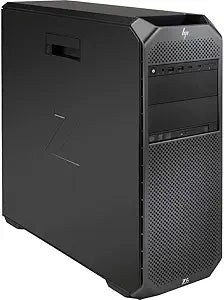
HP Intel Xeon Z6 G4 2X Gold 6148 Workstation (Renewed)
Dual Xeon Gold 6148 delivers 40 cores and 80 threads of scalable compute in a certified HP Z-series chassis built for sustained professional workloads.
View price on Amazon
Affiliate Disclosure: As an Amazon Associate, Studio Supplies earns from qualifying purchases made through links on this page, at no additional cost to you. This helps support our editorial team.
Notice a mistake? Let Us Know
Overview
Description not available.
Frequently Asked Questions
What does running two Xeon Gold 6148 processors actually mean for compute throughput?
Each Gold 6148 is a 20-core/40-thread Skylake-SP chip running at 2.4GHz base with a 3.7GHz turbo, backed by 27.5MB of L3 cache. Two of them give you 40 physical cores and 80 logical threads with a combined 55MB of L3 cache. For workloads that scale across threads — rendering, simulation, compilation, scientific computing — this is a fundamentally different tier of performance than consumer or workstation-class quad-core hardware.
How much RAM does the HP Z6 G4 support, and what type?
The Z6 G4 supports DDR4 ECC Registered (RDIMM) or Load-Reduced (LRDIMM) memory across up to 12 DIMM slots (6 channels per socket), with a theoretical maximum of 384GB. ECC memory detects and corrects single-bit errors in real time — essential for scientific, financial, and engineering workloads where data integrity is non-negotiable.
Is this a good fit for GPU compute workloads like machine learning training?
The Z6 G4's PCIe 3.0 expansion includes multiple full-length slots capable of hosting professional GPU cards. However, as a renewed unit, the specific GPU configuration will vary. The platform supports HP-certified professional GPUs, and the chassis power delivery is designed for sustained multi-GPU loads — but confirm the GPU configuration and power supply wattage of the specific unit before purchase.
What does "Renewed" mean for a workstation at this tier?
HP Renewed (or third-party refurbished) units at this class have typically been remanufactured, tested, and cleaned to functional specification. For enterprise workstations with relatively low utilization histories, renewed units often represent strong value. Verify what warranty coverage accompanies the specific listing and whether an OS license is included.
Does this platform support NVMe storage?
Yes. The Z6 G4 includes HP Z Turbo Drive support via M.2 PCIe slots, enabling NVMe SSD performance alongside traditional SATA storage bays. Combined with the platform's high-bandwidth memory subsystem, storage I/O is rarely the bottleneck in typical professional workloads on this machine.
Related Products


