

HP
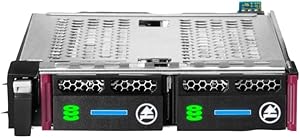
HP P06609-B21 2x480GB SATA M.2 SSD
Dual 480GB SATA M.2 SSDs in a single HPE kit doubles your server's storage capacity while maintaining the reliability baseline enterprise workloads demand.
View price on Amazon
Affiliate Disclosure: As an Amazon Associate, Studio Supplies earns from qualifying purchases made through links on this page, at no additional cost to you. This helps support our editorial team.
Notice a mistake? Let Us Know
Overview
Key Features
Hard Drive/ Interface Type Serial ATA
The advanced research from Hewlett Packard Labs changes the world
At Hewlett Packard Enterprise, quality is everyone’s responsibility and it’s accelerating time to value
Specifications
Brand
HP / HPE
Model / Part Number
P06609-B21
Capacity per Drive
480GB
Kit Quantity
2 Drives
Total Kit Capacity
960GB
Interface
Serial ATA (SATA)
Form Factor
M.2
Drive Type
SSD (Solid State Drive)
Similar Products
Other products from the same family that visitors often consider:
 ✓ Available
HP P09726-B21 1.92TB SATA SSD
View on Amazon → Currently Unavailable
HP SATA FK0064CAAZQ 64GB 2.5" NHP SATA SSD (2 Pack)
Check on Amazon → ✓ Available
HP 877776-B21 480GB SATA SSD
$399.00
View on Amazon → Currently Unavailable
HP 570761-B21 60GB SATA SSD
Check on Amazon → Currently Unavailable
HP 345M8AA 240GB 2.5" SATA SSD
Check on Amazon →Frequently Asked Questions
What does the M.2 form factor mean for server compatibility with this drive?
M.2 is a physical form factor — a compact card-edge connector standard. The P06609-B21 uses a SATA interface over M.2, meaning it requires an M.2 slot wired for SATA (typically M-key or B+M key), not one dedicated to PCIe/NVMe only. Confirm your server's M.2 slot supports SATA signaling before purchasing — many modern workstation motherboards have moved to NVMe-only M.2 slots.
What is the practical sequential read and write throughput for a SATA M.2 SSD?
SATA is capped at approximately 600 MB/s theoretical bandwidth, with real-world sequential reads typically landing between 500–560 MB/s and writes between 480–520 MB/s. This is a fixed ceiling of the SATA interface — not a drive deficiency. For OS drives, application storage, and database reads under normal server load, this is more than adequate; for high-throughput NVMe workloads, the interface will bottleneck before the NAND does.
Why does this kit include two drives rather than a single 960GB unit?
Two drives provide configuration flexibility: they can be deployed independently across two M.2 slots, or paired in RAID 0 for increased throughput, RAID 1 for redundancy, or RAID 5/10 in a broader array. In server contexts, pairing them in a RAID configuration also provides a hardware failure path — if one drive fails, the other retains data depending on RAID level. Single-drive 960GB configurations offer no such redundancy option.
Is this drive certified for HPE ProLiant servers specifically?
The HPE part number (P06609-B21) indicates this is an HPE-branded, server-validated component. HPE-badged drives are firmware-validated for use in HPE ProLiant server environments and will not trigger the "third-party drive" warning that some HPE systems display when non-HPE drives are installed. In non-HPE environments, the drive functions as a standard SATA M.2 SSD.
Does this drive support hardware encryption or power-loss protection?
The product listing does not specify TCG Opal self-encrypting drive (SED) capability or power-loss protection (PLP) capacitors. For deployments where data-at-rest encryption or write-back cache integrity during power events is a requirement, verify these specifications directly with HPE documentation for the P06609-B21 before committing to a deployment.
Related Products
