

HP
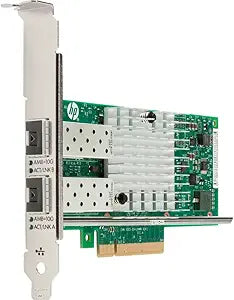
HP X550-T2 10GbE Dual Port Network Card
Supercharge Your Network ConnectivityThe HP X550-T2 10GbE Dual Port NIC provides high-speed network connectivity for demanding applications. Its dual-port design and 10GBase-T support ensure reliable and fast data transfer rates. Ports: 2 Port(s) Interface: Twisted Pair Connectivi...
$489.99*
Check availability
*Price sourced from Amazon.com. Last updated:Aug 30, 2026.Price and availability are subject to change — details.
Affiliate Disclosure: As an Amazon Associate, Studio Supplies earns from qualifying purchases made through links on this page, at no additional cost to you. This helps support our editorial team.
Notice a mistake? Let Us Know
Overview
Supercharge Your Network Connectivity
The HP X550-T2 10GbE Dual Port NIC provides high-speed network connectivity for demanding applications. Its dual-port design and 10GBase-T support ensure reliable and fast data transfer rates.
- Ports: 2 Port(s)
- Interface: Twisted Pair
- Connectivity: 10GBase-T
- Form Factor: Plug-in Card
- Data Transfer Rate: 10GbE
Key Features
Total Number of Ports: 2
Media Type Supported: Twisted Pair
Network Technology: 10GBase-T
Form Factor: Plug-in Card
Device Supported: Workstation
Specifications
Brand
HP
Model
X550-T2
Total Number of Ports
2
Network Technology
10GBase-T
Media Type Supported
Twisted Pair
Form Factor
Plug-in Card
Device Supported
Workstation
Frequently Asked Questions
Is this HP X550-T2 network card compatible with standard desktop computers?
This HP X550-T2 network card is specifically listed as a device supported by workstations, implying it is optimized for or may require workstation-grade systems.
What type of cable is required to connect to this network card?
This network card supports Twisted Pair media, so standard Ethernet cables compatible with 10GBase-T technology are required.
Can I use this card to connect to a slower Gigabit Ethernet network?
The HP X550-T2 card is designed for 10GBase-T network technology, and while 10GbE is typically backwards compatible, performance will be limited by the slower network components.
Does this network card offer any power-saving features?
The provided features for the HP X550-T2 10GbE Dual Port Network Card do not specify any particular power-saving features.
Is this a full-height or low-profile network card?
The form factor is described simply as "Plug-in Card," without specifying if it is full-height or low-profile.
What operating systems are supported by the HP X550-T2 network card?
The product description does not specify the compatible operating systems for the HP X550-T2 10GbE Dual Port Network Card.
Related Products


