



Intel
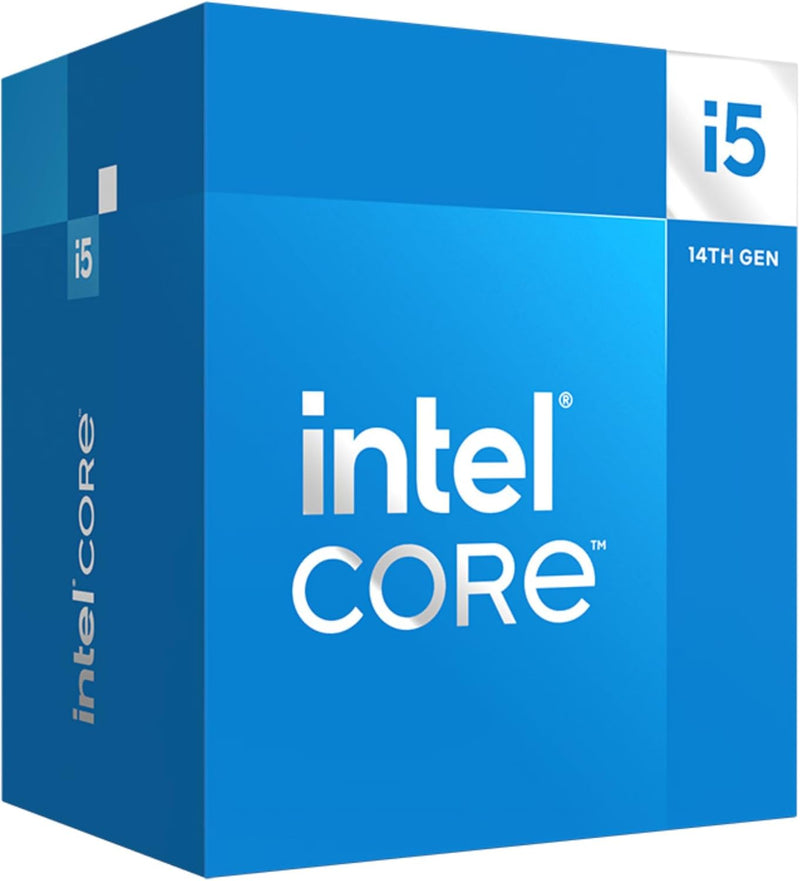
Intel 14500 Core i5 14th Gen Desktop Processor
The Intel Core i5-14500 delivers 14 cores and 20 threads with hybrid architecture for responsive multitasking and gaming.
$247.97*$266.12Save 6%
View on Amazon
✓ In Stock on Amazon.com
*Price sourced from Amazon.com. Last updated:Oct 22, 2026.Price and availability are subject to change — details.
Affiliate Disclosure: As an Amazon Associate, Studio Supplies earns from qualifying purchases made through links on this page, at no additional cost to you. This helps support our editorial team.
Notice a mistake? Let Us Know
Overview
Key Features
14 cores (6 P-cores + 8 E-cores) and 20 threads
Performance hybrid architecture integrates two core microarchitectures, prioritizing and distributing workloads to optimize performance
Up to 5.0 GHz unlocked. 20MB Cache
Compatible with Intel 600-series (with potential BIOS update) and 700-series chipset-based motherboards
PCIe 5.0 & 4.0 support. DDR4 and DDR5 Memory support. RM1 thermal solution included.
Includes Intel Laminar RM1 Cooler
Specifications
Brand
Intel
Model
Core i5-14500
Generation
14th Gen
Total Cores
14 (6 P-cores + 8 E-cores)
Total Threads
20
Max Turbo Frequency
Up to 5.0 GHz
Cache
20MB
Processor Base Power
65W
PCIe Support
PCIe 5.0 & 4.0
Memory Support
DDR5 and DDR4
Chipset Compatibility
Intel 700-series; 600-series with BIOS update
Included Cooler
Intel Laminar RM1
Similar Products
Other products from the same family that visitors often consider:
 ✓ Available
Intel 14400F Core i5 Desktop Processor
$161.10
View on Amazon → ✓ Available
Intel 14400 Core i5 Desktop Processor 4.7 GHz
$203.00
View on Amazon → ✓ Available
Intel BX80646I54570 Core i5 4570 Desktop Processor
$98.56
View on Amazon → ✓ Available
Intel BX8070811600K Core i5 11th Gen Unlocked Processor
$199.00
View on Amazon → ✓ Available
Intel BX80662I56402P Core i5 Processor (Skylake)
$118.66
View on Amazon →Frequently Asked Questions
What socket does the Intel Core i5-14500 use?
The i5-14500 uses the LGA 1700 socket and is compatible with Intel 700-series chipset motherboards, as well as 600-series boards with a potential BIOS update.
Does the Intel i5-14500 come with a cooler?
Yes, it includes the Intel Laminar RM1 cooler in the box, so you do not need to purchase a separate cooling solution for standard use.
Does the i5-14500 support both DDR4 and DDR5 memory?
Yes, the processor supports both DDR4 and DDR5 memory, though your motherboard determines which type you can use.
What is the base power consumption of the i5-14500?
The processor has a base power (TDP) of 65W, making it relatively efficient for a 14-core desktop CPU.
Is the Intel Core i5-14500 unlocked for overclocking?
The product listing mentions speeds up to 5.0 GHz unlocked. However, full overclocking support on Intel processors is typically associated with K-series SKUs and Z-series motherboards.
Related Products


