

Intel
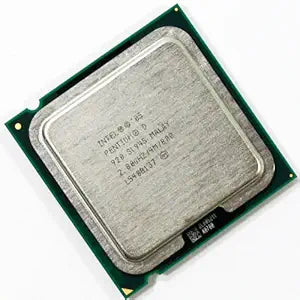
Intel Pentium D 920 2.8GHz Dual-Core CPU
Reliable Dual-Core Performance for Everyday Computing The Intel Pentium D 920 is a dual-core processor designed for desktop computing. With a clock speed of 2.8GHz and a 800MHz bus speed, it provides reliable performance for everyday tasks and applications. Processor Type: Intel Pentium D...
Check availability
Affiliate Disclosure: As an Amazon Associate, Studio Supplies earns from qualifying purchases made through links on this page, at no additional cost to you. This helps support our editorial team.
Notice a mistake? Let Us Know
Overview
Reliable Dual-Core Performance for Everyday Computing
The Intel Pentium D 920 is a dual-core processor designed for desktop computing. With a clock speed of 2.8GHz and a 800MHz bus speed, it provides reliable performance for everyday tasks and applications.
- Processor Type: Intel Pentium D
- Model: 920
- Clock Speed: 2.8GHz
- Bus Speed: 800MHz
- Cache: 2x2MB
- Socket Type: 775
- Cores: Dual-Core
Key Features
Frequency (MHz): 2800
Bus speed (MHz): 800
Socket: LGA775
Level 2 cache size: 4MB
Thermal Design Power (W): 95
Specifications
Processor Model
Pentium D 920
Frequency
2800 MHz (2.8GHz)
Bus Speed
800 MHz
Socket
LGA775
Level 2 Cache Size
4MB
Thermal Design Power (TDP)
95 W
Core Count
Dual-Core
Frequently Asked Questions
What is the frequency of the Intel Pentium D 920 processor?
The Intel Pentium D 920 operates at a frequency of 2800 MHz, or 2.8GHz.
How many cores does the Intel Pentium D 920 CPU have?
The Intel Pentium D 920 is a Dual-Core CPU, capable of handling two processing threads simultaneously.
What socket type does this processor use?
This processor uses the LGA775 socket type, ensuring compatibility with specific motherboard designs.
What is the size of the Level 2 cache on this Intel Pentium D 920 CPU?
The Intel Pentium D 920 CPU comes with a 4MB Level 2 cache size, which helps in faster data retrieval.
What is the Thermal Design Power (TDP) of the Intel Pentium D 920?
The Thermal Design Power (TDP) for this CPU is 95W, indicating its power consumption and heat output.
Related Products


