

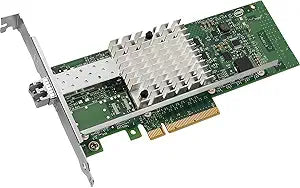
Intel
Intel E10G41BFLR Ethernet Svr Adapter X520-LR1
High-Speed Network Connectivity for ServersThe Intel Ethernet Server Adapter X520-LR1 offers high-performance network connectivity for servers, designed for high availability, scalability, and flexibility. It is an ideal solution for demanding network environments. Connectivity: SFP+ Form Fact...
$441.26*
View on Amazon
✓ In Stock on Amazon.com
*Price sourced from Amazon.com. Last updated:Oct 08, 2026.Price and availability are subject to change — details.
Affiliate Disclosure: As an Amazon Associate, Studio Supplies earns from qualifying purchases made through links on this page, at no additional cost to you. This helps support our editorial team.
Notice a mistake? Let Us Know
Overview
High-Speed Network Connectivity for Servers
The Intel Ethernet Server Adapter X520-LR1 offers high-performance network connectivity for servers, designed for high availability, scalability, and flexibility. It is an ideal solution for demanding network environments.
- Connectivity: SFP+
- Form Factor: Low-profile
- Features: Load balancing on multiple CPUs, iSCSI remote boot support, Fiber Channel Over Ethernet (FCoE) Support, Intel Direct Cache Access (DCA), MSI-X support, Low Latency Interrupts
Key Features
SFP+ connectivity
Low-profile
Load balancing on multiple CPUs
ISCSI remote boot support
Fiber Channel Over Ethernet (Fcoe) Support
Intel Direct Cache Access (Dca)
MSI-X support
Low Latency Interrupts
Specifications
Connectivity
SFP+
Form Factor
Low-profile
Features
Load balancing on multiple CPUs
Features
ISCSI remote boot support
Features
Fiber Channel Over Ethernet (FCoE) Support
Features
Intel Direct Cache Access (DCA)
Features
MSI-X support
Features
Low Latency Interrupts
Frequently Asked Questions
What type of network connection does the Intel E10G41BFLR Ethernet Server Adapter use?
This adapter utilizes SFP+ connectivity, designed for high-speed fiber optic network connections.
Is this a standard size network adapter?
No, it is described as "low-profile," which means it's designed to fit into smaller server chassis.
What is the purpose of load balancing on this adapter?
The adapter features load balancing on multiple CPUs, which is intended to optimize the distribution of network traffic.
Does this adapter support booting from a network?
Yes, it includes iSCSI remote boot support, allowing systems to boot directly from a network storage device.
What is Fiber Channel Over Ethernet (FCoE) Support?
FCoE Support allows the adapter to integrate Fiber Channel storage traffic with Ethernet data traffic over a single network.
What is Intel Direct Cache Access (DCA)?
Intel Direct Cache Access (DCA) is a feature that helps improve data transfer efficiency by allowing network controllers to place data directly into the CPU cache.
How do Low Latency Interrupts benefit performance?
Low Latency Interrupts are designed to reduce delays in the processing of network events, which can improve overall system responsiveness.
Related Products


