

Intel
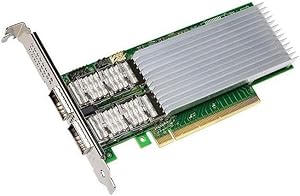
Intel E810CQDA2 Ethernet Network Adapter Dual Port
Accelerate Your Network Performance for Cloud and CommunicationsIntroducing the Intel® Ethernet Network Adapter E810-CQDA2, designed to deliver high bandwidth and increased application throughput for demanding cloud workloads and communications infrastructure. Ports: Single and Dual-Port QSF...
$460.00*$484.61Save 5%
View on Amazon
✓ In Stock on Amazon.com
*Price sourced from Amazon.com. Last updated:Oct 07, 2026.Price and availability are subject to change — details.
Affiliate Disclosure: As an Amazon Associate, Studio Supplies earns from qualifying purchases made through links on this page, at no additional cost to you. This helps support our editorial team.
Notice a mistake? Let Us Know
Overview
Accelerate Your Network Performance for Cloud and Communications
Introducing the Intel® Ethernet Network Adapter E810-CQDA2, designed to deliver high bandwidth and increased application throughput for demanding cloud workloads and communications infrastructure.
- Ports: Single and Dual-Port QSFP28
- Interface: PCI Express (PCIe) 4.0 x16
- Ethernet Port Configuration Tool (EPCT)
- Application Device Queues (ADQ)
- Dynamic Device Personalization (DDP)
- RDMA: Supports both RDMA iWARP and RoCEv2
Key Features
Single and Dual-Port QSFP28
PCI Express (PCIe) 4.0 x16
Ethernet Port Configuration Tool (EPCT)
Application Device Queues (ADQ)
Dynamic Device Personalization (DDP)
Supports both RDMA iWARP and RoCEv2
Specifications
Model
E810CQDA2
Port Configuration
Single and Dual-Port QSFP28
Interface
PCI Express (PCIe) 4.0 x16
Feature
Ethernet Port Configuration Tool (EPCT)
Feature
Application Device Queues (ADQ)
Feature
Dynamic Device Personalization (DDP)
RDMA Support
iWARP, RoCEv2
Frequently Asked Questions
What type of interface does the Intel E810CQDA2 network adapter use?
The Intel E810CQDA2 network adapter uses a PCI Express (PCIe) 4.0 x16 interface, providing high bandwidth for network operations.
What port configurations are available on this network adapter?
This network adapter offers both single and dual-port QSFP28 configurations, allowing for flexible high-speed connectivity.
Does this adapter support any RDMA technologies?
Yes, the Intel E810CQDA2 supports both RDMA iWARP and RoCEv2, which are designed for high-performance, low-latency data transfers.
What is Application Device Queues (ADQ) and how does it benefit performance?
Application Device Queues (ADQ) helps to improve application performance by allowing specific network traffic to be directed to dedicated queues, reducing latency and increasing throughput for critical applications.
Is there a tool to help with configuring the Ethernet ports?
Yes, an Ethernet Port Configuration Tool (EPCT) is included, designed to assist with the setup and management of the network adapter's port settings.
What is Dynamic Device Personalization (DDP)?
Dynamic Device Personalization (DDP) enables the adapter to handle network packets more flexibly and efficiently by customizing the packet processing pipeline.
Related Products


