



Intel
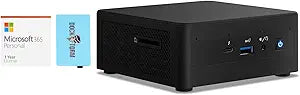
Intel NUC11PAHi7 Mini PC - i7-1165G7, 64GB RAM, 7.6TB SSD, Win 11 Pro
i7-1165G764GB RAM64GB DDR46TB SSD120W
Ultra-compact Intel NUC mini PC with i7-1165G7, massive 64GB RAM, 7.6TB SSD storage, and Windows 11 Pro.
View price on Amazon
Affiliate Disclosure: As an Amazon Associate, Studio Supplies earns from qualifying purchases made through links on this page, at no additional cost to you. This helps support our editorial team.
Notice a mistake? Let Us Know
Overview
Key Features
【Upgraded】 Seal is opened for Hardware/Software upgrade only to enhance performance. No Display ; Wi-Fi 6 AX201 Wifi, Bluetooth 5.2, Ethernet LAN (RJ-45), No Webcam, .
【Powerful Performance with Intel Core i7-1165G7 Quad Core】 11th Gen Intel Core i7-1165G7 2.80GHz Processor (upto 4.7 GHz, 12MB Cache, 4-Cores) ; Integrated Graphics Integrated Graphics, .
【High Speed and Multitasking】 64GB DDR4 SODIMM; 120W Power Supply; Black Color, .
【Enormous Storage】 7.6TB SATA SSD; 1 HDMI, 1 mini Display Port, 2 Thunderbolt 3 (Type-C), SD Reader, No Optical Drive, Headphone/Microphone Combo Jack., Windows 11 Pro., 1 Year Manufacturer warranty from GreatPriceTech (Professionally upgraded by GreatPriceTech)
Includes Microsoft 365 Personal 1 Year Subscription for 1 User(Microsoft 365 Personal | 12-Month Subscription, 1 person | Premium Office apps | 1TB OneDrive cloud storage | PC/Mac;Annual Subscription;Works on Windows, macOS, iOS, and Android), Dockztorm USB Hub
Specifications
Processor
Intel Core i7-1165G7 2.80GHz (up to 4.7GHz)
Memory
64GB DDR4 SO-DIMM
Storage
7.6TB SATA SSD
Graphics
Intel Iris Xe Integrated Graphics
Operating System
Windows 11 Pro
Wireless
Wi-Fi 6 AX201, Bluetooth 5.2
Ports
1x HDMI, 1x mini DisplayPort, 2x Thunderbolt 3 (Type-C), SD Card Reader, Headphone/Mic Combo Jack
Networking
Ethernet LAN (RJ-45)
Power Supply
120W
Form Factor
Mini PC
Dimensions
4.41 x 4.6 x 2.01 inches
Weight
1.21 lbs
Included Software
Microsoft 365 Personal (1-Year Subscription)
Warranty
1 Year (GreatPriceTech)
Frequently Asked Questions
What display outputs does the NUC11PAHi7 support?
It provides one HDMI port, one mini DisplayPort, and two Thunderbolt 3 (Type-C) ports, allowing you to connect multiple monitors simultaneously for multi-display setups.
Is 7.6TB of SSD storage standard for this NUC model?
No, this is a custom-configured unit. The NUC11PAHi7 barebones kit ships without storage or RAM, so this configuration has been built out with 7.6TB of SATA SSD storage and 64GB of DDR4 memory.
Does this NUC include dedicated graphics?
No, it uses the Intel Iris Xe integrated graphics built into the i7-1165G7 processor. While capable for productivity, video playback, and light creative work, it is not designed for demanding 3D gaming or GPU-accelerated rendering.
What software is included with this configuration?
It ships with Windows 11 Pro pre-installed and includes a one-year Microsoft 365 Personal subscription covering Word, Excel, PowerPoint, Outlook, and 1TB of OneDrive storage for one user.
How large is the NUC11PAHi7 physically?
It measures just 4.41 x 4.6 x 2.01 inches and weighs 1.21 pounds, small enough to mount behind a monitor or tuck into virtually any workspace.
Related Products


