



Intel
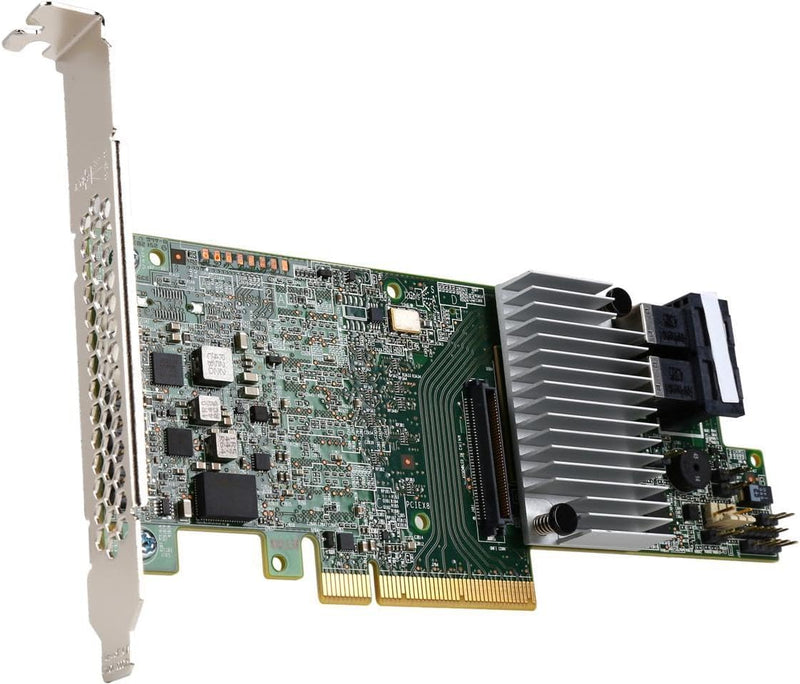
Intel RS3DC080 LSI3108 RAID Controller SAS 3.0 PCIe Card
Deliver 12 Gb/s SAS 3.0 throughput across eight internal ports with 1 GB of onboard DDR3 cache for write-intensive RAID workloads.
$295.00*
View on Amazon
✓ In Stock on Amazon.com
*Price sourced from Amazon.com. Last updated:Sep 14, 2026.Price and availability are subject to change — details.
Affiliate Disclosure: As an Amazon Associate, Studio Supplies earns from qualifying purchases made through links on this page, at no additional cost to you. This helps support our editorial team.
Notice a mistake? Let Us Know
Overview
Key Features
Lsi SAS3108 roc controller providing SAS 3.0 capability including 12 GB/s data transfer
Embedded 1 GB 1866 MHz cache (ECC DDR3 Memory) to efficiently store data in transition
One or two HD SFF8643 SAS/SATA connectors for up to eight internal ports
Speaker to deliver audible alerts
x8 PCI Express generation 3 interface for fast communication with the server board
Specifications
Brand
Intel
Model
RS3DC080
Controller Chip
LSI SAS3108 ROC
Interface
PCI Express 3.0 x8
SAS Standard
SAS 3.0
Data Transfer Rate
12 Gb/s per port
Internal Ports
8
Connectors
1-2x SFF-8643 Mini-SAS HD
Cache Memory
1 GB ECC DDR3 (1866 MHz)
RAID Levels
0, 1, 5, 6, 10, 50, 60
Form Factor
Low Profile
Audible Alert
Onboard speaker
Frequently Asked Questions
What RAID levels does the Intel RS3DC080 support?
Built on the LSI SAS3108 ROC (RAID-on-Chip), it supports RAID 0, 1, 5, 6, 10, 50, and 60. This gives you full flexibility from striping for raw performance to dual-parity configurations for maximum data protection across eight drives.
Is this controller compatible with both SAS and SATA drives?
Yes. The SFF-8643 connectors support both SAS 3.0 (12 Gb/s) and SATA (6 Gb/s) drives. You can mix drive types across the eight ports, though RAID arrays should use uniform drive types for consistent performance within each volume.
Does the 1 GB DDR3 cache include battery backup or flash protection?
The RS3DC080 includes 1 GB of ECC DDR3 1866 MHz cache. Battery backup (AXXRMFBU5 or equivalent Intel maintenance-free backup unit) is sold separately. Without cache protection, you should disable write-back caching to prevent data loss on power failure — or add the BBU/flash module.
What is the PCIe bandwidth and will it bottleneck with eight 12 Gb/s SAS drives?
The card uses a PCIe 3.0 x8 interface, providing approximately 7.88 GB/s of theoretical bidirectional bandwidth. Eight SAS 3.0 ports at 12 Gb/s each yields 12 GB/s aggregate, so the PCIe link can become a bottleneck under sustained maximum throughput from all ports simultaneously — though real-world workloads rarely saturate all ports at wire speed.
Does this controller support SSD caching or tiered storage?
Yes. The LSI SAS3108 chipset supports CacheCade (SSD caching) and FastPath I/O acceleration for SSDs, enabling tiered storage configurations that use SSDs as a cache tier in front of spinning disks.
Related Products


