

Intel
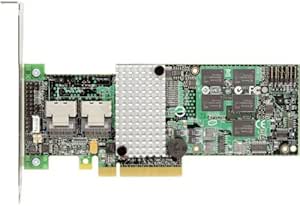
Intel RT3WB080 LSI MegaRAID 8-Port SAS RAID Controller
Eight SAS/SATA ports, 256MB of ECC cache, and full RAID 0–60 support in a half-height PCIe 2.0 card that adds enterprise-grade data protection to any compatible server.
$998.00*
Check availability
*Price sourced from Amazon.com. Last updated:Aug 28, 2026.Price and availability are subject to change — details.
Affiliate Disclosure: As an Amazon Associate, Studio Supplies earns from qualifying purchases made through links on this page, at no additional cost to you. This helps support our editorial team.
Notice a mistake? Let Us Know
Overview
Key Features
Embedded 256 MB 800 MHz cache (ECC DDR2 memory) to efficiently store data in transition
Speaker to deliver audible alerts
Two SFF8087 SAS/SATA connectors for up to eight internal ports
x8 PCI Express Generation 2 interface for fast communication with the server board
LSI SAS2108 ROC controller for outstanding performance
Specifications
Brand
Intel
Model
RT3WB080
Controller Chip
LSI SAS2108 ROC
Host Interface
PCI Express 2.0 x8
Ports
8-port SAS/SATA (2x SFF-8087)
Data Transfer Rate
600 MB/s per port (6Gb/s)
Cache
256MB ECC DDR2 @ 800MHz
RAID Levels
0, 1, 5, 6, 10, 50, 60
Form Factor
Half-height, low-profile plug-in card
Audible Alert
Yes (onboard speaker)
Frequently Asked Questions
What RAID levels does the RT3WB080 support and which should I use for redundancy?
The controller supports RAID 0, 1, 5, 6, 10, 50, and 60. For straightforward redundancy with a small drive count, RAID 1 (mirroring) or RAID 5 (distributed parity, minimum 3 drives) are the practical choices. RAID 6 provides dual-parity protection — it can survive two simultaneous drive failures — which is recommended for arrays using large-capacity drives where rebuild times increase failure-during-rebuild risk.
What is the maximum per-port data transfer rate and what does that mean in practice?
Each of the eight ports delivers up to 600MB/s — this is the 6Gb/s SAS/SATA interface rate. In a RAID configuration, aggregate throughput will depend on the array level and the number of active drives. A RAID 0 or RAID 10 array across multiple 6Gb/s drives can deliver substantially higher aggregate sequential throughput than a single port can.
Does the 256MB ECC cache make a measurable difference in write performance?
Yes. The write-back cache allows the controller to acknowledge writes to the OS before data is committed to disk, which dramatically reduces write latency under mixed I/O workloads. The ECC (Error-Correcting Code) designation means the cache memory self-corrects single-bit errors, preventing silent data corruption in the cache layer — a requirement for any enterprise or production storage use.
Is this card compatible with standard PCIe x8 slots, including x16 physical slots?
Yes. The RT3WB080 uses a PCIe 2.0 x8 electrical interface in a half-height, low-profile form factor. It will seat in any PCIe x8 or x16 slot — including x16 physical slots running x8 electrically. Verify that your server chassis supports half-height low-profile cards, as the RT3WB080 is not a full-height card.
Does this controller require a battery backup unit to protect the write cache?
A Battery Backup Unit (BBU) is strongly recommended if you are using write-back caching mode in a production environment. Without a BBU, a power loss while data is in the cache can result in data loss or corruption. The RT3WB080 is designed to support an optional BBU — check Intel/LSI's compatibility list for supported units for this controller.
Related Products


