

Intel
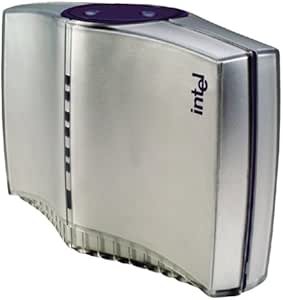
Intel WSAP5000AM Pro/Wireless 5000 LAN Access Point
Reliable Wireless Connectivity for Your Business The Intel WSAP5000AM Pro/Wireless 5000 LAN Access Point provides high-speed, secure wireless access for your business network. Experience seamless connectivity and enhanced mobility for your workforce. Specifications * Auto-negotiates to the high...
Check availability
Affiliate Disclosure: As an Amazon Associate, Studio Supplies earns from qualifying purchases made through links on this page, at no additional cost to you. This helps support our editorial team.
Notice a mistake? Let Us Know
Overview
Reliable Wireless Connectivity for Your Business
The Intel WSAP5000AM Pro/Wireless 5000 LAN Access Point provides high-speed, secure wireless access for your business network. Experience seamless connectivity and enhanced mobility for your workforce.Specifications
* Auto-negotiates to the highest possible speed up to 54 Mbps * Throughput up to five times faster than 802.11b * Supports up to 64 users per access point * Includes Intel PROSet Utility for easy peer-to-peer networking and automatic wired/wireless switching * Operates on the 5 GHz UNII spectrum * Dual compliant with optional kit available for simultaneous operation in both 5 GHz 801.11a and 2.4 GHz 802.11bKey Features
Complies with the IEEE 802.11a standard
Data transfer rates of up to 54 Mbps
Up to 13 times the network capacity of 802.11b WLANs
Transmits at 5 GHz
128-bit WEP scalable and supports VPN and ACL
Specifications
Wireless Standard
IEEE 802.11a
Data Transfer Rate
Up to 54 Mbps
Frequency Band
5 GHz
Security Protocol
128-bit WEP scalable
Network Capacity
Up to 13 times that of 802.11b WLANs
Additional Features
VPN and ACL support
Frequently Asked Questions
What Wi-Fi standard does this access point support?
This Intel Pro/Wireless 5000 LAN Access Point complies with the IEEE 802.11a standard, providing compatibility within that specific wireless generation.
What are the maximum data transfer rates achievable with this access point?
The Intel WSAP5000AM is capable of data transfer rates up to 54 Mbps, which allows for efficient data flow within its supported standard.
Does this access point operate on the 2.4 GHz or 5 GHz frequency band?
This access point transmits exclusively at 5 GHz, which can offer a less congested wireless environment in certain scenarios.
What kind of security features are included with this access point?
The Intel WSAP5000AM includes 128-bit WEP scalable security and also supports VPN and ACL for enhanced network protection and access management.
How does its network capacity compare to older Wi-Fi standards?
This Intel access point offers up to 13 times the network capacity of 802.11b WLANs, allowing it to handle more concurrent connections efficiently.
Can this access point be used with newer Wi-Fi devices?
While it complies with 802.11a, its compatibility with much newer Wi-Fi devices operating on newer standards (like Wi-Fi 5 or 6) may be limited, potentially requiring those devices to fall back to 802.11a if supported.
Related Products


