

Lenovo
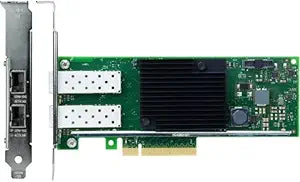
Lenovo 7ZT7A00537 ThinkSystem - X710-DA2 PCIe 10Gb - Ethernet Adapter
Enhanced Network Performance: Lenovo ThinkSystem X710-DA2 Ethernet Adapter The Lenovo ThinkSystem X710-DA2 PCIe 10Gb 2-Port SFP+ Ethernet Adapter is designed to meet the demanding needs of next-generation data centers. With unmatched features for server and network virtualization, small packet pe...
View price on Amazon
Affiliate Disclosure: As an Amazon Associate, Studio Supplies earns from qualifying purchases made through links on this page, at no additional cost to you. This helps support our editorial team.
Notice a mistake? Let Us Know
Overview
Enhanced Network Performance: Lenovo ThinkSystem X710-DA2 Ethernet Adapter
The Lenovo ThinkSystem X710-DA2 PCIe 10Gb 2-Port SFP+ Ethernet Adapter is designed to meet the demanding needs of next-generation data centers. With unmatched features for server and network virtualization, small packet performance, and low power consumption, this adapter provides a flexible, scalable, and resilient network solution.
Specifications:
- Form Factor: PCIe
- Ports: 2 x SFP+
- Data Rate: 10Gb Ethernet (GbE)
- Features: Intel I/O Virtualization Technology, VMDq
Key Features
VXLAN/NVGRE Hardware Offloads: These stateless offloads preserve application performance for overlay networks. With these offloads, it is possible to distribute network traffic across CPU cores. At the same time, X710 offloads LSO, GSO, and checksum from the host software, which reduces CPU overhead.
Mobile and cloud application acceleration: Intel's Data Plan Development Kit (DPDK) delivers an open driver where users can fine-tune small packet performance, which delivers line-rate at 128 byte, and near line-rate at 64 byte.
Low latency: Intel Ethernet Flow Director delivers hardware-based application steering and Intel Data Direct I/O makes the processor cache the primary destination and source of I/O data rather than main memory. Combined, latency is reduced and Intel reports a three-fold improvement in RPS.
Virtualization performance: With Intel Virtualization Technology (VT), the X710 family of adapters delivers outstanding I/O performance in virtualized server environments. These adapters reduce I/O bottlenecks by providing intelligent offloads for networking traffic per virtual machine (VM), which enables near-line rate speeds for small packets and supports almost an unlimited amount of isolated traffic flows so that you can scale your cloud environment.
Next-generation VMDq: The X710 adapters support up to 256 VMDq VMs and offer enhanced Quality of Service (QoS) feature by providing weighted round-robin servicing for the Tx data. The adapters offload the data-sorting functionality from the hypervisor to the network silicon, which improves data throughput and CPU usage.
PCI-SIG SR-IOV implementation: Provides an implementation of the PCI-SIG standard for I/O Virtualization. The physical configuration of each port is divided into multiple virtual ports. Each virtual port is assigned to an individual VM directly by bypassing the virtual switch in the Hypervisor, which results in near-native performance.
VM load balancing: Provides traffic load balancing (Tx and Rx) across VMs that are bound to the team interface. It also provides fault tolerance if a switch, port, cable, or adapter fails.
Specifications
Brand
Lenovo
Model
X710-DA2
Type
Ethernet Adapter
Interface
PCIe
Speed
10Gb
Features
VXLAN/NVGRE Hardware Offloads, Intel Data Plan Development Kit (DPDK) Support, Intel Ethernet Flow Director, Intel Data Direct I/O, Intel Virtualization Technology (VT), Next-generation VMDq, PCI-SIG SR-IOV implementation, VM load balancing
Frequently Asked Questions
What kind of network offloads does this adapter support?
The Lenovo ThinkSystem X710-DA2 supports VXLAN/NVGRE hardware offloads, which help preserve application performance in overlay networks by reducing CPU overhead.
How does this adapter improve latency?
It reduces latency through Intel Ethernet Flow Director for hardware-based application steering and Intel Data Direct I/O, which prioritizes processor cache for I/O data.
Is this adapter suitable for virtualized server environments?
Yes, it is highly suitable, offering Intel Virtualization Technology (VT) to deliver strong I/O performance and reduce bottlenecks for virtual machines.
What is the benefit of next-generation VMDq on this adapter?
Next-generation VMDq supports up to 256 VMDq VMs and enhances Quality of Service with weighted round-robin servicing for transmit data, improving throughput and CPU usage.
Does this adapter offer fault tolerance for virtual machines?
Yes, it provides VM load balancing, which distributes traffic across VMs and offers fault tolerance in case of failures like a switch, port, cable, or the adapter itself.
Related Products


