



Lenovo
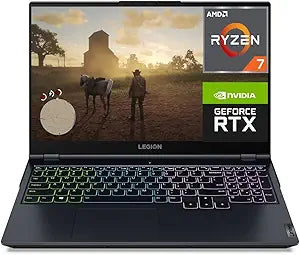
Lenovo Legion 5 Ryzen 7 RTX 3070 Gaming Laptop
Ryzen 7 5800H muscle and RTX 3070 at 130W TGP deliver a 15.6" gaming laptop capable of maxing settings at 1080p with a 165Hz display to match.
Check availability
Affiliate Disclosure: As an Amazon Associate, Studio Supplies earns from qualifying purchases made through links on this page, at no additional cost to you. This helps support our editorial team.
Notice a mistake? Let Us Know
Overview
Key Features
15.6" FHD (1920x1080) IPS 300nits Anti-glare, 165Hz, 100% sRGB, Dolby Vision, Free-Sync, G-Sync, DC dimmer
AMD 8-Core Ryzen 7 5800H (>i7-10870H) : Base Frequency 3.2GHz, Max Boost Frequency Up to 4.4GHz, 16MB L3 Cache, 16 Threads; NVIDIA GeForce RTX 3070 8GB GDDR6, Boost Clock 1560MHz, TGP 130W
This laptop has been professionally upgraded to 32GB Memory, 2TB PCIe SSD. Original Seal is opened for upgrade ONLY. We do provide a 1-year standard warranty on upgraded RAM/SSD. Bundled with HDMI cable
3x USB 3.2 Gen 1;1x USB 3.2 Gen 1 (Always On);1x USB-C 3.2 Gen 2 (support data transfer and DisplayPort 1.4);1x USB-C 3.2 Gen 2 (support data transfer, Power Delivery and DisplayPort 1.4);1x HDMI 2.1;1x Ethernet (RJ-45);1x Headphone / microphone combo jack (3.5mm);1x Power connector
Windows 11 Home (64-bit), RGB Backlit Keyboard, Bluetooth 5.1, Nahimic Audio, 720p HD Webcam with E-camera Shutter
Specifications
Processor
Ryzen 7
Graphics Card
RTX 3070
Frequently Asked Questions
What does a 130W TGP on the RTX 3070 mean for gaming performance compared to desktop GPUs?
TGP (Total Graphics Power) of 130W is among the higher allocations for an RTX 3070 laptop GPU, which meaningfully closes the gap to desktop performance. Expect frame rates roughly 15–25% below a desktop RTX 3070 in GPU-bound titles — still well above 60 fps at 1080p in virtually all modern games, and competitive at 165Hz for esports titles.
Does the 165Hz display actually benefit from the RTX 3070 at 1080p?
Yes — at 1920x1080, the RTX 3070 at 130W TGP can sustain frame rates above 100 fps in most modern AAA titles on high settings, and well above 165 fps in less demanding esports games. The 1080p IPS panel is well-matched to this GPU at this resolution; pushing to 1440p or 4K via an external display will reduce that headroom significantly.
How does the AMD Ryzen 7 5800H hold up under sustained gaming load without throttling?
The 5800H is an 8-core, 16-thread Zen 3 chip rated to 4.4 GHz boost. Under sustained simultaneous CPU+GPU load (common in open-world games), it maintains performance better than competing quad-core laptop CPUs, though all mobile processors thermal-throttle to some degree in extended sessions — thermal pad quality and ambient temperature will affect long-session clock sustainability.
Is 2TB PCIe SSD storage sufficient for a gaming library, and is there an expansion slot?
2TB is a generous allocation for a gaming laptop — it accommodates 15–25 AAA titles alongside the OS and applications without requiring an external drive. Most Legion 5 variants include a second M.2 slot for future expansion, allowing you to add storage without replacing the primary drive.
What connectivity does this laptop provide for peripherals and external displays?
The Legion 5 includes 3x USB 3.2 Gen 1 Type-A, 2x USB-C 3.2 Gen 2, HDMI 2.1, and Ethernet (RJ-45). HDMI 2.1 is significant — it supports 4K at 120Hz to an external monitor, enabling high-refresh external display setups without an adapter or bandwidth compromise.
Related Products


