

Microsoft
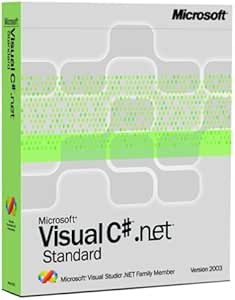
Microsoft Visual C# .NET Standard 2003 (Old Version)
Legacy Development Tool for the .NET Framework Microsoft Visual C# .NET Standard 2003 offers a comprehensive environment for developing .NET-connected software. With a familiar syntax for C++ developers, this tool enables the creation of robust applications for Windows, the Web, and various devi...
View price on Amazon
Affiliate Disclosure: As an Amazon Associate, Studio Supplies earns from qualifying purchases made through links on this page, at no additional cost to you. This helps support our editorial team.
Notice a mistake? Let Us Know
Overview
Legacy Development Tool for the .NET Framework
Microsoft Visual C# .NET Standard 2003 offers a comprehensive environment for developing .NET-connected software. With a familiar syntax for C++ developers, this tool enables the creation of robust applications for Windows, the Web, and various devices, supporting code reuse across multiple .NET languages.
Specifications:
- Platform: .NET
- Target Applications: Windows, Web, and Devices
- Key Features: Code Obfuscation, Code Reusability
Key Features
Build .NET-connected software for Windows, the Web, and a wide range of devices
Build a variety of applications, from device solutions to datacenter servers. Use code obfuscation technology to protect your intellectual property
Reuse code from within any programming language that supports .NET
Packed with enhancements and new features
Immediately familiar to C++ and Java developers
Specifications
Product Name
Visual C# .NET Standard 2003
Version
2003 (Old Version)
Development Platform
.NET
Application Targets
Windows, Web, wide range of devices
Key Feature
Code obfuscation technology
Language Compatibility
Supports code reuse from any .NET language
Target Audience
C++ and Java developers
Brand
Microsoft
Frequently Asked Questions
What kind of applications can be built with Microsoft Visual C# .NET Standard 2003?
This software allows developers to build .NET-connected software for Windows, the Web, and a wide range of devices, including device solutions and datacenter servers.
Does Visual C# .NET Standard 2003 offer protection for intellectual property?
Yes, it includes code obfuscation technology designed to help protect your intellectual property within the developed software.
Is this version of Visual C# compatible with modern programming practices?
As an "Old Version" from 2003, it may not fully align with modern programming practices or support the latest .NET framework capabilities.
Can I reuse code from other programming languages with this software?
Yes, one of its features is the ability to reuse code from within any programming language that supports the .NET framework.
Is Visual C# .NET Standard 2003 easy to learn for developers familiar with other languages?
It is described as being "Immediately familiar to C++ and Java developers," suggesting a relatively straightforward transition for those with experience in these languages.
Related Products


