

Microsoft
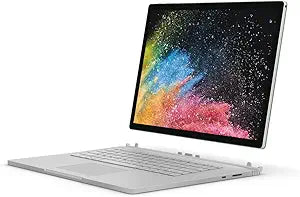
Microsoft HNR-00001 Surface Book 2 15" i7 16GB 256GB
16 GB RAMUSB C
GTX 1060 discrete GPU, 8th-gen quad-core i7, and a detachable 15" PixelSense display — the Surface Book 2 is a workstation that separates from its own GPU.
View price on Amazon
Affiliate Disclosure: As an Amazon Associate, Studio Supplies earns from qualifying purchases made through links on this page, at no additional cost to you. This helps support our editorial team.
Notice a mistake? Let Us Know
Overview
Key Features
Microsoft Surface Book 2 Features a 8th generation Intel Quad Core i7 Processor, 256 GB of storage, 16 GB RAM, and up to 17 hours of video playback
Enhanced Graphics performance with NVIDIA GeForce GTX 1060 discrete GPU w/6GB GDDR5 Graphics Memory
The fastest Surface Book yet, with 4x more power
Vibrant PixelSense Display: Now available with a new 15" touchscreen
Four versatile modes of use and new USB C port; Contrast ratio: 1600:1
Specifications
Processor
8th generation Intel Quad Core i7
Storage
256 GB
RAM
16 GB
Graphics Card
NVIDIA GeForce GTX 1060 discrete GPU w/6GB GDDR5 Graphics Memory
Display Size
15"
Display Type
PixelSense Display touchscreen
Battery Life
Up to 17 hours of video playback
Ports
USB C
Contrast Ratio
1600:1
Frequently Asked Questions
What makes the Surface Book 2's detachable design different from a standard 2-in-1 laptop?
The discrete NVIDIA GTX 1060 GPU lives in the keyboard base, not the display. When you detach the screen, you get a standalone tablet running on the CPU and integrated graphics. Reattach it and the GTX 1060 becomes active. This means GPU-dependent workloads require the base to be connected.
How does the NVIDIA GeForce GTX 1060 6GB GDDR5 perform in creative workloads?
The GTX 1060 with 6GB GDDR5 is a competent mid-range GPU for GPU-accelerated creative work — Adobe Premiere Pro, Lightroom, and DaVinci Resolve all benefit measurably from it. It handles 4K timeline playback and CUDA-accelerated exports well. It is not suited to heavy 3D rendering or modern AAA gaming at high settings.
What is the real-world battery life, and does it differ by mode?
Microsoft claims up to 17 hours of video playback, which represents near-ideal conditions. Typical productivity use with the base attached runs 10–13 hours. Using the GTX 1060 under load — video export, gaming — drops that significantly. Tablet-only mode conserves battery fastest.
Does the 8th-generation quad-core i7 throttle under sustained workloads in this chassis?
Less than most thin laptops — the Surface Book 2's thicker base provides more thermal headroom than ultrabook-class designs. Under sustained workloads the i7-8650U (a 15W part with Turbo to 4.2GHz) maintains higher sustained clocks than it would in a thinner chassis.
Is 256GB of storage sufficient for a creative professional workflow?
It depends on your pipeline. 256GB fills quickly with RAW photo libraries, video projects, or game installs. For users with external NAS or cloud storage workflows it can work, but it is the most constrained spec on this configuration and the most likely upgrade consideration.
Related Products

