

Microsoft
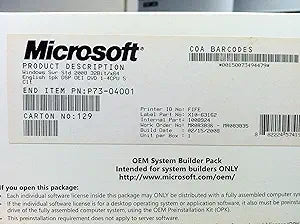
Microsoft P73-04001 Windows Server 2008 Standard (Old Version)
Empower Your Business with Windows Server Standard 2008Windows Server 2008 Standard is a robust and feature-rich server operating system designed to enhance the reliability and flexibility of your server infrastructure. With built-in web and virtualization capabilities, it helps save time, reduce...
View price on Amazon
Affiliate Disclosure: As an Amazon Associate, Studio Supplies earns from qualifying purchases made through links on this page, at no additional cost to you. This helps support our editorial team.
Notice a mistake? Let Us Know
Overview
Empower Your Business with Windows Server Standard 2008
Windows Server 2008 Standard is a robust and feature-rich server operating system designed to enhance the reliability and flexibility of your server infrastructure. With built-in web and virtualization capabilities, it helps save time, reduce costs, and provide a solid foundation for your business.
- Operating System: Windows Server 2008 Standard
- Architecture: 32-bit/x64
- Ideal for: System Builders
- Features: Enhanced Web and virtualization capabilities, streamlined configuration and management tasks, enhanced security features
Key Features
Windows Server operating system for increased technological efficiency
Next-generation hypervisor-based server virtualization technology
Includes IIS 7.0, Web server, and security-enhanced, easy-to-manage Web platform
Helps prevent unauthorized connections to networks, servers, data, and user accounts
Increases reliability and flexibility of server infrastructure; saves time and money
Specifications
Product
Windows Server 2008 Standard
Version
Old Version
Hypervisor
Next-generation hypervisor-based server virtualization technology
Web Server
IIS 7.0
Security Features
Helps prevent unauthorized connections
Benefits
Increases reliability and flexibility
Frequently Asked Questions
What is the primary purpose of Microsoft P73-04001 Windows Server 2008 Standard?
Its primary purpose is to serve as a Windows Server operating system, designed to enhance technological efficiency in server environments, including web serving and virtualization.
Does this version of Windows Server include virtualization capabilities?
Yes, it includes "next-generation hypervisor-based server virtualization technology" which allows for the efficient management of virtual machines.
Is Windows Server 2008 Standard considered a current operating system?
No, the product title clearly states "(Old Version)," indicating that it is an outdated operating system, and support from Microsoft has likely ended.
What web server is integrated with Windows Server 2008 Standard?
It includes IIS 7.0, which is described as a security-enhanced and easy-to-manage web platform.
How does this server OS address security?
It incorporates features designed to help prevent unauthorized connections to networks, servers, data, and user accounts.
Will this operating system be compatible with the latest hardware and software?
As an "Old Version," compatibility with the very latest hardware and software may be limited, and modern applications might require a newer server OS.
Related Products


