



Microsoft
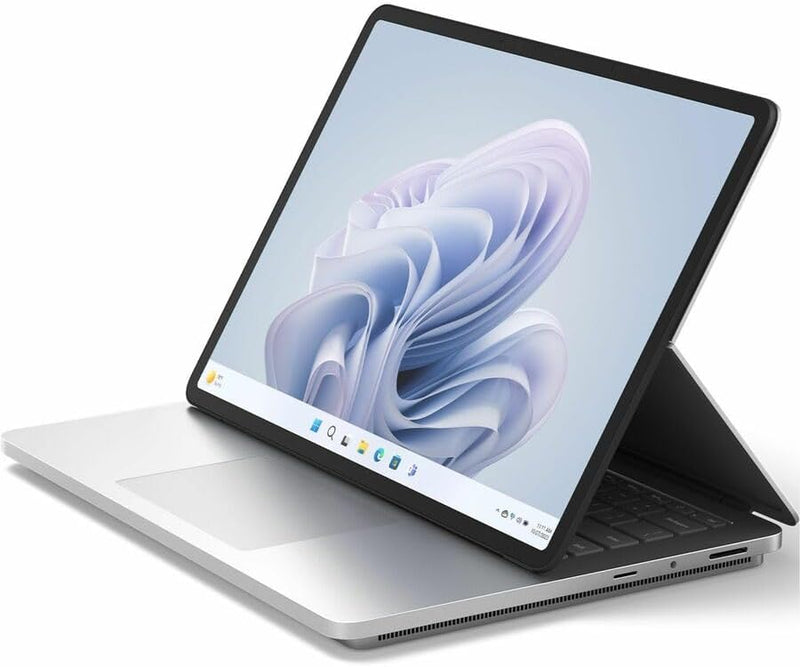
Microsoft Z1T00001 Surface Laptop Studio 2 i7 Touch Convertible
2400 x 1600
32GB LPDDR5X RAM, RTX 2000 Ada, and a 120Hz touchscreen that folds flat — the Surface Laptop Studio 2 puts workstation-class rendering in a convertible chassis.
$3,749.99*
View on Amazon
✓ In Stock on Amazon.com
*Price sourced from Amazon.com. Last updated:Aug 30, 2026.Price and availability are subject to change — details.
Affiliate Disclosure: As an Amazon Associate, Studio Supplies earns from qualifying purchases made through links on this page, at no additional cost to you. This helps support our editorial team.
Notice a mistake? Let Us Know
Overview
Key Features
With 32 GB of memory, runs as many programs as you want without losing the execution
The 14.4" 2400 x 1600 screen provides a great movie watching experience
1 TB total SSD capacity for spacious storage with much faster data transfer speed than standard hard drives
18 Hours battery run time helps you stay unwired and work longer non-stop
NVIDIA RTX 2000 Ada Generation 8 GB discrete graphic card provides excellent ability in a variety of multimedia applications and user experiences
Specifications
Processor
Intel Core i7-13800H (13th Gen, 14-core, up to 5.2GHz)
RAM
32GB LPDDR5X
Storage
1TB SSD
Graphics
NVIDIA RTX 2000 Ada Generation, 8GB GDDR6
Display
14.4" Touchscreen, 2400 x 1600
Operating System
Windows 11 Pro
Form Factor
2-in-1 Convertible with Floating Slider
Battery Life
Up to 18 hours
Frequently Asked Questions
What does the RTX 2000 Ada Generation GPU actually enable that integrated graphics can't?
The RTX 2000 Ada's 8GB GDDR6 VRAM and Ada Lovelace architecture unlock hardware ray tracing, DLSS 3 upscaling, and CUDA/Tensor core acceleration — meaning 3D renders in Blender or Substance Painter that would stall Iris Xe graphics finish in a fraction of the time. For video editors, GPU-accelerated encoding via NVENC is a real, measurable throughput gain over CPU-only pipelines.
Is 32GB LPDDR5X RAM actually meaningful versus standard DDR5?
Yes. LPDDR5X runs at higher bandwidth with lower voltage than standard SODIMM DDR5, which directly benefits the integrated memory bus and reduces thermal output under sustained load. For creative workflows juggling large Photoshop documents or After Effects compositions, 32GB ensures you're not hitting the swap file, and the bandwidth headroom keeps the GPU fed without stalls.
What bottleneck does the 1TB NVMe SSD address in this machine?
With a 1TB NVMe drive, the Surface Laptop Studio 2 eliminates storage as a bottleneck for project file access, large asset libraries, and OS responsiveness. It handles scratch disk duties for demanding apps without slowing the system to HDD-era crawl. The key point: SSDs at this tier support multi-gigabyte-per-second sequential reads, so loading large project files is near-instant.
How does the floating slider form factor affect real-world usability versus a standard clamshell?
The slider mechanism allows the display to pull forward into Stage and Studio modes, giving access to the full screen as a drawing surface or angled canvas. This is a hardware design choice with a real workflow payoff for stylus users — the screen sits closer to flat than most 2-in-1 hinges allow, reducing wrist strain during extended pen input sessions.
Does the 18-hour battery rating hold under GPU load?
Under light productivity workloads — documents, browser, video playback — runtime approaches the rated figure. Under sustained GPU load (3D work, video export), expect 4–6 hours. This is a standard thermal management trade-off: the RTX 2000 Ada draws significant wattage, and battery capacity on a convertible chassis is physically constrained.
Related Products


