



NVIDIA
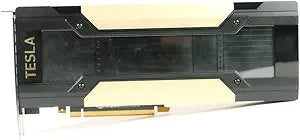
NVIDIA GPU-NVTV100 Tesla V100: 16GB HBM2 Graphics Card
16GB HBM2 memory and 900GB/s bandwidth make the Tesla V100 the definitive accelerator for deep learning training and HPC simulation workloads.
$357.45*$494.00Save 27%
View on Amazon
✓ In Stock on Amazon.com
*Price sourced from Amazon.com. Last updated:Sep 15, 2026.Price and availability are subject to change — details.
Affiliate Disclosure: As an Amazon Associate, Studio Supplies earns from qualifying purchases made through links on this page, at no additional cost to you. This helps support our editorial team.
Notice a mistake? Let Us Know
Overview
Key Features
NVIDIA Video Card 900-2G500-0000-000 Tesla V100 16GB CoWoS HBM2 PCI Express 3.0 Brown Box
Specifications
GPU Model
Tesla V100
Memory
16GB CoWoS HBM2
Bus Interface
PCI Express 3.0
Part Number
900-2G500-0000-000
Similar Products
Other products from the same family that visitors often consider:
Frequently Asked Questions
Does the Tesla V100 require active cooling infrastructure, and what does passive-only cooling mean for installation?
The V100 ships with a passive cooler only — no onboard fan. This is a hard requirement for server chassis with forced airflow (1U/2U rack servers, blade enclosures). Installing this card in a standard desktop ATX case without dedicated chassis airflow will result in thermal throttling or damage. Verify your chassis moves sufficient CFM across the card before installation.
What PCIe slot does the V100 require, and does it support NVLink?
The V100 uses a PCIe 3.0 x16 slot in full-length, full-height form factor. NVLink support depends on the specific board variant — the SXM2 version supports NVLink natively; the PCIe variant (this card) uses an NVLink bridge connector, but NVLink-to-NVLink topology requires compatible server platforms. Verify your platform's NVLink support before planning multi-GPU configurations.
What compute APIs does the Tesla V100 support, and is it compatible with CUDA workloads?
The V100 supports OpenACC, OpenCL, and DirectCompute as listed, and critically supports CUDA (Volta architecture, compute capability 7.0). This means TensorFlow, PyTorch, and RAPIDS GPU-accelerated libraries run natively. CUDA 9.0 and later are required for full Volta feature access including Tensor Cores.
How much power does the Tesla V100 draw and what PSU is required?
The PCIe V100 has a TDP of approximately 250W, requiring both a sufficient PSU and auxiliary power connectors (typically dual 8-pin PCIe). In a server context, ensure your rack PDU allocation accounts for sustained 250W draw per card, not just peak estimates.
Is this card suitable for gaming or consumer graphics workloads?
No — the Tesla V100 has no display outputs and lacks consumer driver support. It is a compute-only card purpose-built for HPC, AI training, and scientific simulation. Attempting to use it as a gaming GPU is not supported and will not function. It requires a host GPU for display output.
Related Products


