



QNAP
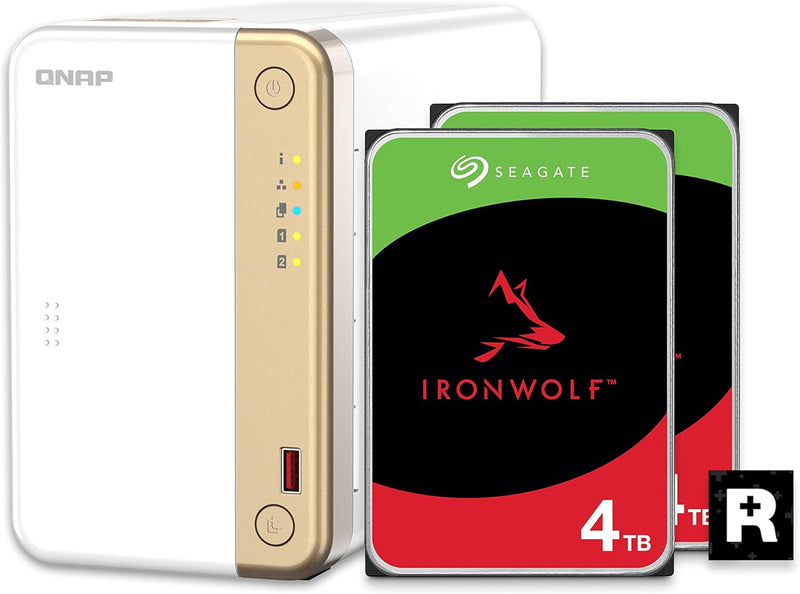
QNAP TS-262-4G-24ST-US 2-Bay NAS with 4TB IronWolf HDDs
4GB DDR4
Preconfigured RAID 1 NAS with 2.5GbE networking and dual NVMe cache slots — plug it in and your 4TB of mirrored storage is ready in minutes.
$579.00*
Check availability
*Price sourced from Amazon.com. Last updated:Aug 28, 2026.Price and availability are subject to change — details.
Affiliate Disclosure: As an Amazon Associate, Studio Supplies earns from qualifying purchases made through links on this page, at no additional cost to you. This helps support our editorial team.
Notice a mistake? Let Us Know
Overview
Key Features
2 x 4TB Seagate IronWolf drives pre-installed and pre-configured with RAID 1. Hassle-free
Seagate IronWolf drives include a robust 3-year Rescue Data Recovery Services plan
Dual-core Intel Celeron N4505 2-core/2-thread burst up to 2.9 GHz with 4GB DDR4 RAM (16GB Max)
2.5GbE (2.5G/1G/100M) ports accelerates file sharing across teams and devices or streamline large file transfers
Dual M.2 PCIe Gen3x1 NVMe SSD slots enable cache acceleration or SSD storage pools for improved performance
Specifications
Brand
QNAP
Model
TS-262-4G-24ST-US
Drive Bays
2
Processor
Intel Celeron N4505 (up to 2.9 GHz, 2-core/2-thread)
RAM
4GB DDR4 (16GB Max)
Pre-installed Storage
2 × 4TB Seagate IronWolf HDD
Usable Storage (RAID 1)
4TB
RAID Configuration
RAID 1 (Preconfigured)
Network Port
2.5GbE (2.5G / 1G / 100M)
M.2 SSD Slots
2 × PCIe Gen3x1 NVMe
Encryption
AES-NI Hardware Acceleration
Storage Tiering
Qtier Auto-Tiered Storage
Data Recovery Plan
Seagate 3-Year Rescue Data Recovery Services
Frequently Asked Questions
What does RAID 1 mean for this unit's data protection, and what is the actual usable storage?
RAID 1 writes every file identically to both 4TB IronWolf drives simultaneously — if one drive fails, the other holds all data intact and the NAS keeps running. Usable storage is 4TB (half the 8TB raw total). That's the trade-off: redundancy costs you half the raw capacity.
Can the 4GB RAM be upgraded, and does it need to be?
Yes — the TS-262 supports up to 16GB DDR4. For basic file sharing and backup, 4GB is sufficient. If you plan to run multiple QNAP apps, containers, or active surveillance streams simultaneously, upgrading to 8GB or 16GB is worth doing early.
What do the dual M.2 NVMe slots actually do, and are SSDs included?
No SSDs are included — the slots are empty. They support either SSD caching via Qtier (which accelerates frequently accessed files by serving them from flash instead of the HDDs) or dedicated SSD storage pools. PCIe Gen3x1 interface limits max throughput to roughly 500–800 MB/s per slot, but that is still a significant latency improvement over spinning disk for active workloads.
Does the 2.5GbE port deliver full speed on a standard gigabit network?
No — the NAS negotiates down to 1GbE if your switch doesn't support 2.5GbE. To realize the full 2.5Gbps throughput, both your network switch and the client machine need 2.5GbE support. Budget for a compatible switch if you don't already have one.
What does the Seagate 3-year Rescue Data Recovery plan cover?
It provides professional data recovery services from Seagate if a drive suffers a physical failure — covering the labor and media cost of recovery. It does not replace the failed drive itself, and it applies to the included IronWolf drives, not to drives you add later.
Related Products
