

SanDisk
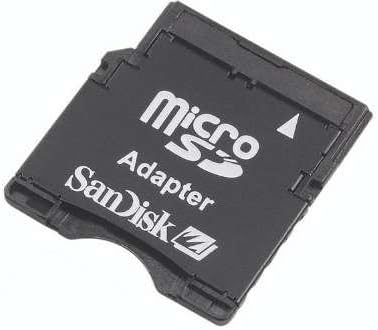
SanDisk FBA_TXTOMINISD MicroSD to MiniSD Adapter
Bridge the microSD-to-miniSD gap with a passive adapter that costs less than a coffee and solves a real compatibility problem.
View price on Amazon
Affiliate Disclosure: As an Amazon Associate, Studio Supplies earns from qualifying purchases made through links on this page, at no additional cost to you. This helps support our editorial team.
Notice a mistake? Let Us Know
Overview
Key Features
Converts your microSD card to a MiniSD card
Allows you to use MicroSD in MiniSD card slots
Bulk Package (not retail package)
Specifications
Product Type
MicroSD to MiniSD Adapter
Package Type
Bulk Package
Frequently Asked Questions
What does this adapter actually do — does it add any processing or storage capacity of its own?
It is a purely passive electrical and mechanical adapter with zero onboard storage, processing, or circuitry. It physically re-routes the microSD card's contacts to the miniSD pinout, allowing a device with a miniSD slot to read the microSD card as if it were a native miniSD card. The adapter itself contributes nothing to capacity or speed.
Will the adapter affect my microSD card's read/write speed?
No measurable speed degradation — the adapter is passive, so the transfer rate is determined entirely by the microSD card's rated speed class and the host device's interface speed. There is no signal conversion or buffering that could introduce latency.
Which devices still use miniSD slots that this adapter would be relevant for?
miniSD was a transitional format used in mid-2000s mobile phones, early PDAs, and some GPS devices before microSD became the dominant standard. This adapter is primarily useful for accessing legacy hardware or recovering data from older devices — it has essentially no role in current-generation equipment.
Is this the same as a microSD-to-SD (full-size) adapter?
No — this bridges microSD to the intermediate miniSD form factor, which is physically larger than microSD but smaller than standard full-size SD. Do not confuse the two: a full-size SD adapter will not fit a miniSD slot and vice versa.
Does the bulk packaging affect the product's functionality or reliability?
No. Bulk packaging simply means the adapter ships without retail box, documentation, or branded blister packaging — the adapter itself is identical in form and function to the retail-packaged version.
Related Products


