SanDisk

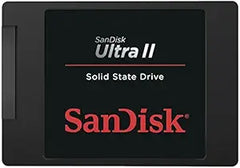
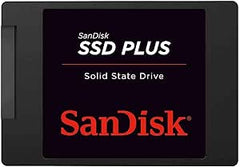
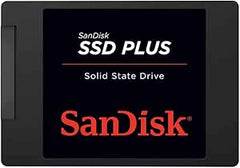
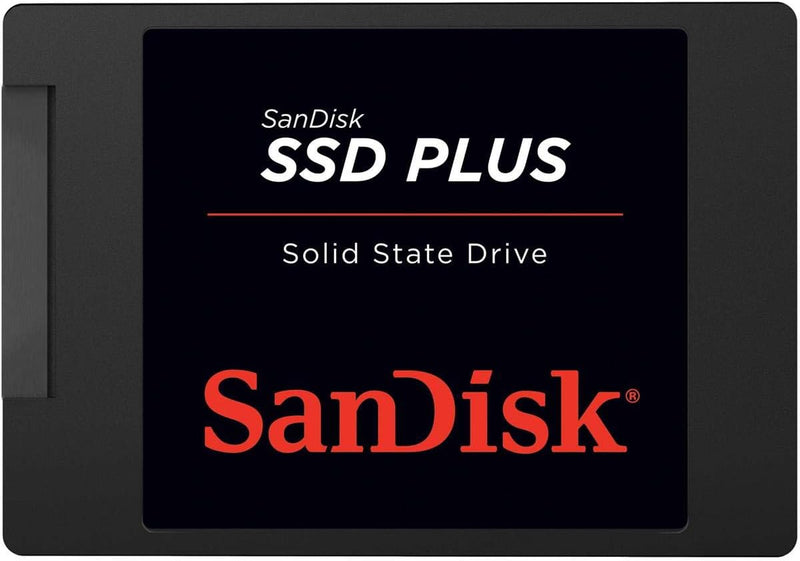
SanDisk SDSSDA-2T00-G26 2TB SSD PLUS SATA III Internal

4.7 (81352 reviews)
2TB SSD

The SanDisk SSD PLUS 2TB delivers sequential reads up to 545 MB/s over SATA III, transforming slow mechanical drives into responsive storage for everyday computing.

$428.89*
In Stock on Amazon.com
View on Amazon

*Price sourced from Amazon.com. Last updated:Jun 03, 2026.Price and availability are subject to change.

Affiliate Disclosure: Studio Supplies may earn a commission from qualifying purchases made through links on this page, at no additional cost to you. This helps support our editorial team.

Notice a mistake? Let Us Know

Overview

The SanDisk SSD PLUS 2TB is a 2.5" SATA III solid-state drive built for the large and well-established market of laptops and desktops still running mechanical hard drives. Its specifications — 545 MB/s sequential read, 450 MB/s sequential write, SATA III 6 Gb/s interface — represent the practical performance ceiling of the SATA protocol, which means there is no interface-level headroom left unrealized. The 2TB capacity positions it as both an OS drive and a primary storage volume, eliminating the need to manage data across multiple drives in a single-bay system. SanDisk's nCache technology uses an SLC write buffer to maintain strong burst write performance for the short-duration write patterns that dominate desktop and laptop workloads — application installs, document saves, browser caching — where the drive rarely writes more data than the buffer can absorb before the operation completes.

This drive is built for the upgrade scenario: replacing a failing or slow mechanical hard drive in an existing laptop or desktop to restore responsiveness without replacing the entire system. The 7mm slim form factor fits the full range of modern laptop bays, including ultrabooks that require the thinner profile. The 1500G shock rating is not marketing language — it reflects the real engineering advantage of NAND flash over platters in mobile use, where hard drives are historically vulnerable to head crashes from even minor drops or movement during operation. For IT departments refreshing aging hardware, students upgrading budget laptops, or home users looking to extend the productive life of an existing machine, the SSD PLUS 2TB resolves the storage bottleneck at the lowest practical cost per gigabyte in its category.

Key Features

Easy upgrade for faster boot-up, shutdown, application load and response (As compared to 5400 RPM SATA 2.5” hard drive. Based on published specifications and internal benchmarking tests using PCMark Vantage scores.).Specific uses: Business, personal

Boosts burst write performance, making it ideal for typical PC workloads

The perfect balance of performance and reliability

Read or write speeds of up to 545MB/s/450MB/s (Based on internal testing; performance may vary depending upon drive capacity, host device, OS and application.)

Shock-resistant for proven durability —even if you drop your computer (Shock resistant (up to 1500G) and vibration resistant (5gRMS, 10-2000 HZ/4.9 gRMS, 7-800 HZ), Temperature (from 0 degrees Celcius to 70 degrees Celcius))

Specifications

Capacity
2TB
Interface
SATA III 6 Gb/s
Form Factor
2.5" / 7mm
Sequential Read Speed
Up to 545 MB/s
Sequential Write Speed
Up to 450 MB/s
Shock Resistance
Up to 1500G
Vibration Resistance
5gRMS (10–2000 Hz) / 4.9gRMS (7–800 Hz)
Operating Temperature
0°C to 70°C
Special Features
nCache burst write technology
Brand
SanDisk
Model
SDSSDA-2T00-G26

Crucial MX500 SATA SSD (500GB / 1TB / 2TB) — Editorial Review & Use Cases

The Crucial MX500 family (CT500MX500SSD1, CT1000MX500SSD1, CT2000MX500SSD1, plus the M.2 SATA variants CT1000MX500SSD4) is Crucial's mainstream-pro SATA III SSD line — TLC NAND with DRAM cache, ~560 MB/s sequential read / 510 MB/s sequential write, 5-year warranty / 360TBW endurance (1TB model), AES-256 hardware encryption, and Power Loss Immunity protection. Per Crucial's official MX500 product page, the MX500 has been a 5+ year staple for SATA-port system upgrades, sitting one tier above the entry-level BX500 (QLC NAND, no DRAM) and below NVMe-class options.

What the MX500 Specifically Wins Over BX500

  • TLC NAND (vs BX500's QLC NAND) — TLC has 3x the endurance of QLC at the same density. Real-world: MX500 handles 360TBW (terabytes written) endurance on the 1TB model vs BX500's 240TBW. Translates to longer reliable life under sustained write workloads
  • DRAM cache (vs BX500's DRAM-less design) — sustained random write performance is markedly better. For databases, VMs, video edit scratch, the DRAM cache prevents the "cliff" where sustained writes drop to QLC-direct speeds (~80-100 MB/s vs MX500's sustained 500+ MB/s)
  • AES-256 hardware encryption — supports OPAL 2.0 / TCG hardware encryption for secure-erase + drive-level encryption. BitLocker / FileVault leverage it for hardware-accelerated encryption
  • Power Loss Immunity (PLI) — onboard capacitors flush in-flight writes to NAND on power loss. Reduces risk of file system corruption on unexpected shutdowns. Critical for desktop / workstation use
  • 5-year warranty + Crucial / Micron parent reliability
  • Solid SATA III interface compatibility — works with any SATA port (desktop motherboard, laptop SATA, USB-SATA enclosure) without TRIM / driver issues
  • M.2 SATA variant (CT*MX500SSD4) — for M.2 SATA slots (not NVMe!) — verify motherboard slot supports SATA M.2 before purchasing this variant

Where the MX500 Specifically Fits

  • SATA-port system upgrades — older motherboards / SATA-only systems where NVMe isn't an option
  • Boot drive on older PCs — replaces HDD with SSD for dramatic boot + app responsiveness improvements
  • Secondary game / media drive in newer PCs with NVMe primary + SATA secondary
  • Mac / Linux servers + NAS arrays — TLC + DRAM + 5-year warranty + PLI is the appropriate reliability tier
  • Workstation scratch drive — Photoshop / Premiere / DaVinci Resolve scratch + cache without NVMe overhead
  • Database / VM hosting — sustained write performance + endurance suit small-to-medium DB workloads
  • External USB-SATA enclosure use — portable SSD with SATA III speeds (~560 MB/s) via USB 3 enclosure
  • Older laptop SATA upgrade — replaces 2.5" HDD with SSD for substantial battery life + responsiveness gain
  • Surveillance / DVR storage — DRAM + TLC handles continuous-write workloads
  • Linux servers requiring TRIM-aware SSDs — fully supported via fstrim

Honest Limits Buyers Should Know

  • SATA III caps at 560 MB/s — NVMe is 6-12x faster. For workflows where SSD speed matters (large file editing, AAA game loading, video edit timeline scrubbing), NVMe (Crucial P3, WD Black SN850, Samsung 990 PRO) is dramatically faster. SATA SSD is the "adequate for most users" tier
  • Sustained writes can throttle on prolonged workloads. When the DRAM cache fills, sustained writes drop to ~200-300 MB/s direct-to-NAND. Multi-hour sustained workloads see this throttling; bursts of write activity don't
  • NOT for M.2 NVMe slots. The M.2 SATA variant (CT*MX500SSD4) only fits M.2 SATA slots (B-key or B+M-key with SATA support). Modern motherboards typically have M.2 NVMe slots (PCIe / M-key). Verify slot type before buying M.2 SATA — installing M.2 SATA in M.2 NVMe slot does NOT work
  • 2.5" form factor — needs SATA cable + SATA power. Desktop install needs an open SATA port + SATA power from PSU. Verify available before assuming installation works
  • 4K random IOPS lag behind NVMe. NVMe Gen3 SSDs deliver ~600K IOPS at 4K QD32; MX500 delivers ~95K. For database / VM hosting workloads, this matters; for everyday use, it doesn't
  • 3-bit TLC has slightly worse endurance than 2-bit MLC. Premium-tier SSDs (Samsung 970 PRO, Intel Optane) used MLC for higher endurance. MX500's TLC is mainstream-grade; not for write-heavy enterprise workloads
  • SLC cache size limits. The pseudo-SLC cache (used for fast writes) is 6-9% of total capacity. After exhausting it, writes drop to TLC-direct speeds
  • USB-SATA enclosure throughput depends on enclosure quality. Cheap UASP-disabled enclosures cap at 200-300 MB/s; quality ASMedia 2362-based enclosures hit the SATA III ceiling

Where Buyers Should Look Elsewhere

  • NVMe-class speeds → Crucial P3 / P3 Plus, WD Black SN770 / SN850X, Samsung 970 EVO Plus / 990 PRO
  • Budget SATA SSD (acceptable speed loss) → Crucial BX500 (QLC, DRAM-less, lower endurance)
  • Enterprise / 24/7 write-heavy → Crucial Pro / Samsung 870 PRO (MLC) / Intel Datacenter SSDs
  • External portable SSD (USB-C) → SanDisk Extreme Portable / Samsung T7 / WD My Passport SSD
  • Premium SATA with longer warranty → Samsung 870 EVO (5 yr, similar specs, slightly higher price)
  • Higher capacity (4TB / 8TB SATA SSD) → Samsung 870 QVO (QLC), Crucial MX500 4TB

Sources & Citations

  1. Crucial, "MX500 SATA SSD product family page," crucial.com (accessed 2026-05-18)
  2. Tom's Hardware, "SATA SSD comparison and benchmarks," tomshardware.com (accessed 2026-05-18)
  3. AnandTech, "Crucial MX500 review and TLC SSD coverage," anandtech.com (accessed 2026-05-18)
  4. Backblaze, "SSD reliability + endurance studies," backblaze.com (accessed 2026-05-18)

Last verified: 2026-05-18
Now that you've seen the details — ready to take a closer look?

View on Amazon

Similar Products

Other products from the same family that visitors often consider:

Pros & Cons

👍 Pros

  • Sequential read speeds up to 545 MB/s saturate the SATA III bus ceiling, maximizing throughput available from the interface
  • 2TB capacity on a SATA SSD provides substantial storage for primary OS drives, media libraries, or backup repositories
  • 1500G shock resistance eliminates mechanical failure risk from drops, making it reliable for laptop upgrades in mobile workflows
  • 7mm height fits slim and standard laptop bays interchangeably without a spacer
  • nCache burst write technology accelerates the write performance profile for the short, frequent writes typical of everyday PC workloads

👎 Cons

  • SATA III interface caps maximum throughput at ~550 MB/s — users who need sustained high-bandwidth transfers for 4K video editing or large dataset work will find NVMe PCIe drives materially faster
  • nCache write acceleration is limited to burst operations; sustained large sequential writes will exhaust the SLC cache and drop to native TLC NAND write speeds
  • No included mounting bracket or adapter for 3.5" desktop bays — large desktop tower installations may require a separate adapter
  • Does not include cloning software in the box, requiring a separate third-party tool for migrating an existing OS installation

Frequently Asked Questions

This drive uses the SATA III (6 Gb/s) interface with a 2.5" form factor at 7mm height. It is compatible with any system that has a 2.5" SATA bay — including virtually all laptops manufactured after 2010 and desktop systems with a 2.5" or 3.5" bay (using an included or separate adapter bracket). It is backward compatible with SATA II ports, though maximum throughput will be limited to ~300 MB/s on older SATA II controllers.
A typical 5400 RPM mechanical hard drive delivers 80–120 MB/s sequential read speeds with 10–15ms seek latency. The SSD PLUS's 545 MB/s reads represent a 4–6x sequential throughput improvement, but more importantly, the near-zero seek latency of NAND flash storage (no moving read head) means random access operations — OS boot, application launches, file searches — are dramatically faster in real-world use, well beyond what the sequential spec alone suggests.
SATA III's 6 Gb/s bus limits effective throughput to approximately 550–560 MB/s, which means the SSD PLUS operates near the practical ceiling of the interface. NVMe drives on PCIe Gen 3 x4 can reach 3,500 MB/s — but for typical office workloads, web browsing, and general file access, SATA SSD throughput is already the non-bottleneck. NVMe provides a measurable benefit primarily in sustained large-file transfers and storage-intensive creative workloads.
nCache is a write-buffering technology that stages incoming writes to a faster SLC cache region before committing to the main TLC NAND. This boosts burst write speeds significantly for typical workloads — short file copies, application installations, and OS operations — where you rarely write more than a few gigabytes consecutively. Sustained writes beyond the cache buffer will drop to the native TLC write speed, which is lower than the rated 450 MB/s.
The SSD PLUS is rated to withstand up to 1500G of shock and operates within a vibration tolerance of 5gRMS (10–2000Hz). Unlike mechanical drives, there are no moving parts to damage from drops or movement. This makes it meaningfully more durable than an HDD in a mobile laptop environment and eliminates the risk of data corruption from vibration during operation.