



Seagate
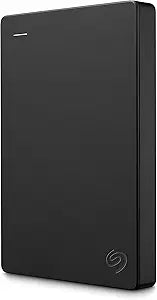
Seagate STGX2000400 2TB Portable USB 3.0 External HDD (Renewed)
18 inchUSB 3.0
2TB of USB 3.0 portable storage with true plug-and-play recognition delivers reliable backup capacity at a fraction of SSD pricing.
$119.95*$129.99Save 7%
View on Amazon
✓ In Stock on Amazon.com
*Price sourced from Amazon.com. Last updated:Oct 21, 2026.Price and availability are subject to change — details.
Affiliate Disclosure: As an Amazon Associate, Studio Supplies earns from qualifying purchases made through links on this page, at no additional cost to you. This helps support our editorial team.
Notice a mistake? Let Us Know
Overview
Key Features
Easily store and access 2TB to content on the go with the Seagate Portable Drive, a USB external hard drive
Designed to work with Windows or Mac computers, this external hard drive makes backup a snap just drag and drop
To get set up, connect the portable hard drive to a computer for automatic recognition no software required
This USB drive provides plug and play simplicity with the included 18 inch USB 3.0 cable
Enjoy long term peace of mind with the included 1 year limited warranty
Specifications
Brand
Seagate
Model
Expansion (STGX2000400)
Capacity
2TB
Interface
USB 3.0
Form Factor
2.5-inch Portable
Power
Bus-Powered (USB)
Cable Length
18 inches (included)
Compatibility
Windows, Mac, PS4, Xbox
Condition
Renewed (Refurbished)
Warranty
1-Year Limited
Similar Products
Other products from the same family that visitors often consider:
 ✓ Available
Seagate STGX2000400 Portable 2TB External Hard Drive USB 3.0
$68.50
View on Amazon → ✓ Available
Seagate STGX2000400 Portable 2TB USB 3.0 Hard Drive
$129.99
View on Amazon → ✓ Available
Seagate FreeAgent GoFlex Desk: 2TB USB 3.0 External HDD (Renewed)
$74.99
View on Amazon → ✓ Available
Seagate 2TB Portable External Hard Drive (Renewed)
View on Amazon → Currently Unavailable
Seagate STDR2000203 2TB Backup Plus USB 3.0 External HDD Red
Check on Amazon →Frequently Asked Questions
What is the real-world transfer speed of this drive over USB 3.0?
USB 3.0 has a theoretical 5Gbps ceiling, but this drive's 2.5-inch spinning HDD mechanism is the actual bottleneck. Expect sequential read/write speeds of approximately 100–130MB/s — roughly 3–4x faster than USB 2.0, but nowhere near USB 3.0's theoretical maximum. For large sequential file transfers (video archives, backups), that throughput is adequate; for small random-file operations the rotational HDD latency, not USB bandwidth, will be the limiting factor.
Does this drive require external power or a separate power cable?
No. It is bus-powered via the included 18-inch USB 3.0 cable — a single connection provides both data and power. This works reliably on desktop USB ports and most laptop ports, but some older or low-power USB 2.0 ports may struggle to deliver adequate current for spinning-disk spin-up. Use the USB 3.0 port if available.
Is any formatting or software setup required out of the box?
No software is required. The drive is recognized automatically by Windows and macOS as a standard USB mass storage device. It ships formatted as exFAT or NTFS depending on the unit — both are natively readable on Windows, macOS, and modern game consoles. No companion software is needed for basic drag-and-drop use.
What does "Renewed" mean for this drive, and does the warranty still apply?
Renewed (refurbished) means the drive has been returned, inspected, and certified for resale. The listing specifies a 1-year limited warranty. Functionally renewed drives perform identically to new units, but the SMART health data from prior use may show some accumulated power-on hours or read/write cycles — worth checking with a free utility like CrystalDiskInfo after purchase.
Will this drive work with PS4 and Xbox for game storage expansion?
Yes. Both PS4 and Xbox One/Series consoles support USB 3.0 external HDD storage expansion. PS4 supports extended storage (installing games directly) on drives with USB 3.0 and capacity up to 8TB. Xbox supports external game storage similarly. The drive presents as a standard USB mass storage device and is recognized without additional configuration.
Related Products
