

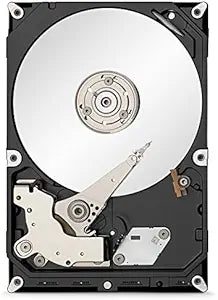
Seagate
Seagate 4374973 8TB Desktop HDD 7200 RPM Internal Drive
Eight terabytes at 7200 RPM with a 256MB cache and SATA 6Gb/s interface gives your desktop the bulk storage capacity to handle years of accumulating media, backups, and data.
$367.48*
View on Amazon
✓ In Stock on Amazon.com
*Price sourced from Amazon.com. Last updated:Oct 22, 2026.Price and availability are subject to change — details.
Affiliate Disclosure: As an Amazon Associate, Studio Supplies earns from qualifying purchases made through links on this page, at no additional cost to you. This helps support our editorial team.
Notice a mistake? Let Us Know
Overview
Key Features
8TB 3.5" Desktop SATA 7200RPM
8TB Desktop SATA 6Gb s 3.5" Internal Hard Drive - 7200RPM 256MB Cache, SINGLE PACK
Desktop Hard Drives To Help Lower Costs
The one drive for every desktop system need, supported by 30 years of trusted performance, reliability and simplicity.
Store as much desktop data as you need with multiple capacities up to 8TB
Store data faster with SATA 6Gb/s interface that optimizes burst performance
Rest easy knowing your drive delivers dependable performance with Seagate AcuTrac servo technology
Have confidence with safe, fast and easy drive retirement provided
8TB 3.5" Desktop SATA 7200RPM8TB Desktop SATA 6Gb s 3.5" Internal Hard Drive - 7200RPM 256MB Cache, SINGLE PACK
Seagate ST8000DM002
Specifications
Capacity
8TB
Form Factor
3.5"
Interface
SATA 6Gb/s
RPM
7200 RPM
Cache
256MB
Product Type
Internal Hard Drive
Model Number
ST8000DM002
Similar Products
Other products from the same family that visitors often consider:
 ✓ Available
Seagate ST8000NM006A 8TB 7200 RPM Enterprise HDD
$319.00
View on Amazon → ✓ Available
Seagate ST8000VX0002 Surveillance HDD 8TB Internal Hard Drive
$544.45
View on Amazon → Currently Unavailable
Seagate IronWolf Pro 8TB NAS Hard Drive CMR 7200 RPM
Check on Amazon → ✓ Available
Seagate ST8000DM004/ST800DMZ04 8TB BarraCuda Internal HDD
$279.99
View on Amazon →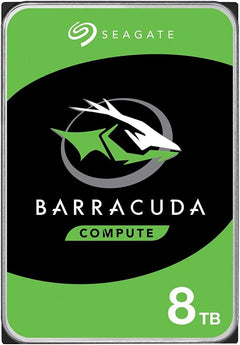 Currently Unavailable
Seagate BarraCuda ST8000DM004 8TB Internal HDD
Check on Amazon →Frequently Asked Questions
What does 7200 RPM actually mean for real-world transfer speeds compared to a 5400 RPM drive?
A 7200 RPM spindle rotates faster than a 5400 RPM drive, reducing rotational latency (the time the drive waits for the correct sector to pass the read head). In practice, 7200 RPM desktop drives like this Seagate deliver sequential read/write speeds in the 190–220 MB/s range, while 5400 RPM drives typically top out around 140–160 MB/s. The difference is most noticeable when reading or writing large sequential files — video libraries, disk images, or database dumps. Random I/O performance, however, is still far slower than any SSD.
Does the 256MB cache on this drive actually improve performance, and when does it matter?
The 256MB DRAM cache buffers recently read data and organizes pending writes for sequential efficiency. It benefits repeated access to the same data (like an operating system swap file reading the same pages) and smooths out write bursts by staging data before committing to the platters. For media server use — streaming large video files to multiple clients — the cache helps maintain consistent throughput. For cold random reads, the cache provides less benefit.
Will this drive work in a NAS enclosure, or is it desktop-only?
This is a desktop-class drive (Seagate BarraCuda / Desktop HDD line, ST8000DM002). It is not rated or vibration-compensated for NAS use. In a multi-bay NAS enclosure where adjacent drive vibration is significant, a NAS-specific drive (Seagate IronWolf, WD Red) with built-in vibration compensation technology is the correct specification. Using a desktop drive in a NAS is common and often functional, but it is outside the drive's design envelope.
How does the SATA 6Gb/s interface affect actual drive throughput?
SATA 6Gb/s (SATA III) provides a maximum theoretical bandwidth of 600 MB/s. At 190–220 MB/s sequential throughput, this drive operates well within the SATA interface's headroom — the interface is not the bottleneck. SATA 6Gb/s is backward compatible with SATA 3Gb/s and SATA 1.5Gb/s ports, though the drive will operate at the host port's maximum speed on older interfaces.
What is Seagate AcuTrac servo technology, and does it matter for data reliability?
AcuTrac is Seagate's servo system that compensates for lateral vibration — keeping the read/write head on track on high-density platters where track widths are narrow. At 8TB density, the tracks per inch are extremely high, meaning even small lateral movement can cause read errors without servo compensation. AcuTrac is a reliability feature that directly supports consistent read/write accuracy on this high-capacity drive.
Related Products
