

Seagate
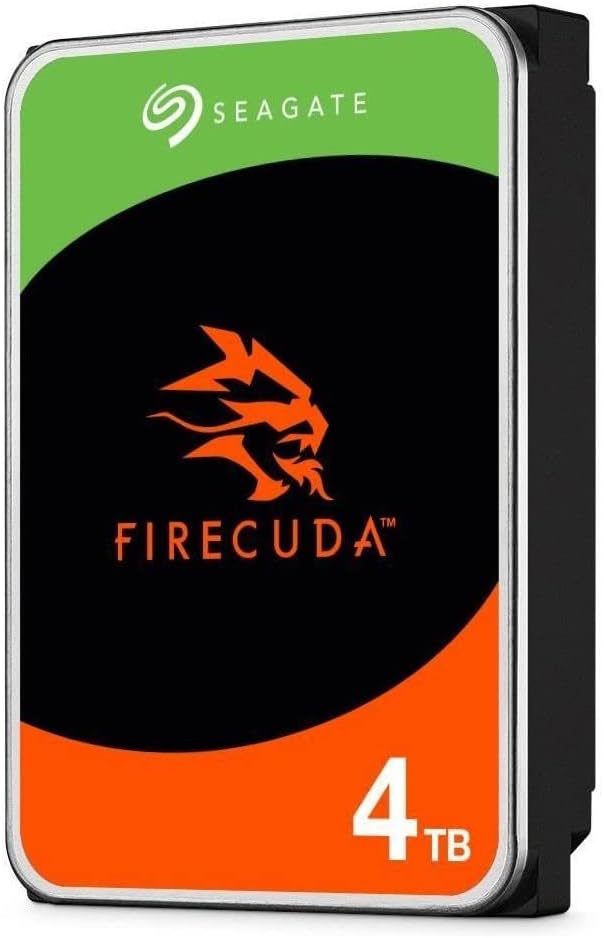
Seagate ST4000DX005 FireCuda 4TB SATA Gaming HDD
A 4TB 7200-RPM gaming hard drive with 256MB cache for fast load times and massive game library storage.
View price on Amazon
Affiliate Disclosure: As an Amazon Associate, Studio Supplies earns from qualifying purchases made through links on this page, at no additional cost to you. This helps support our editorial team.
Notice a mistake? Let Us Know
Overview
Key Features
Build the ultimate Storage Vault with this massive capacity 4TB hard drive
Access data faster with 7200-RPM speeds and a SATA 6Gb/s interface
Achieve new performance heights with a large 256MB cache to load applications and files faster
Obtain maximum sustained transfers at 255MB/s
Worry less with the included 3-year Rescue Data Recovery Services and 5-year limited warranty
Specifications
Capacity
4TB
Interface
SATA 6Gb/s
RPM
7200 RPM
Cache
256MB
Form Factor
3.5 Inch
Data Transfer Rate
255MB/s
Frequently Asked Questions
Is the FireCuda ST4000DX005 a hybrid drive (SSHD) or a traditional hard drive?
The ST4000DX005 is a traditional 7200-RPM hard drive with a 256MB cache. Earlier FireCuda models were SSHDs with flash cache, but this version relies on its high RPM and large buffer for performance.
What type of systems is this drive compatible with?
It uses a standard SATA 6Gb/s interface and 3.5-inch form factor, making it compatible with desktop PCs, gaming towers, and external enclosures that accept 3.5-inch SATA drives.
What data transfer speeds can I expect from this drive?
Seagate rates the ST4000DX005 at up to 255MB/s data transfer rate, though real-world sequential speeds will depend on the specific workload and system configuration.
Is this drive suitable for use as a NAS or RAID drive?
While it can physically work in a NAS, the FireCuda line is optimized for desktop and gaming use. Seagate's IronWolf series is specifically designed for NAS environments with features like vibration tolerance and 24/7 operation ratings.
How loud is this drive during operation?
As a 7200-RPM 3.5-inch mechanical drive, it will produce some audible noise during seek operations. It will be noticeably louder than a 5400-RPM drive or an SSD, which is typical for high-performance HDDs.
Related Products
