



Seagate
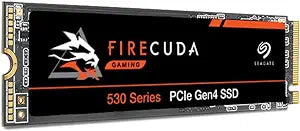
Seagate ZP4000GM3A013 FireCuda 530 4TB NVMe PCIe Gen4 SSD
4TB NVMePCIe Gen4PCIe Gen3
The Seagate FireCuda 530 4TB delivers blazing 7300MB/s PCIe Gen4 speeds with 5150 TBW endurance for gamers and creators.
$377.99*
Check availability
*Price sourced from Amazon.com. Last updated:Oct 23, 2026.Price and availability are subject to change — details.
Affiliate Disclosure: As an Amazon Associate, Studio Supplies earns from qualifying purchases made through links on this page, at no additional cost to you. This helps support our editorial team.
Notice a mistake? Let Us Know
Overview
Key Features
Speed reigns—Seagate’s FireCuda 530 dominates the SSD lineup, delivering pure performance, absolute power, advanced components, and unrivaled endurance
Exhilarating performance up to 7300MB/s—harness the full power of PCIe Gen4 speeds to dominate next-generation games and apps
Our fastest FireCuda SSD ever, built for the ultimate in sustained, pro-level gaming and accelerated content creation—with transfer speeds up to 2× faster than PCIe Gen3 NVMe SSDs and 12× faster than SATA SSDs
Built with a Seagate-validated E18 controller and the latest 3D TLC NAND to provide the most advanced speed and durability
Enjoy long-term peace of mind with the included five-year limited warranty and three years of Rescue Data Recovery Services
The available storage capacity may vary.
Specifications
Brand
Seagate
Model
ZP4000GM3A013
Series
FireCuda 530
Capacity
4TB
Interface
M.2 PCIe Gen4 ×4 NVMe 1.4
Form Factor
M.2 2280
Sequential Read
Up to 7300 MB/s
NAND Type
3D TLC NAND
Controller
Phison E18 (Seagate-validated)
Endurance (TBW)
5100 TBW
MTBF
1.8 Million Hours
Warranty
5-Year Limited + 3-Year Rescue Data Recovery
Frequently Asked Questions
What interface does the FireCuda 530 use?
It uses an M.2 2280 form factor with a PCIe Gen4 ×4 NVMe 1.4 interface, compatible with any motherboard or device that supports M.2 PCIe Gen4 slots.
Is the FireCuda 530 compatible with the PS5?
Yes, the M.2 2280 form factor and PCIe Gen4 interface meet the PS5's SSD expansion requirements, though a heatsink (sold separately) is recommended.
What warranty and data recovery coverage is included?
Seagate includes a five-year limited warranty and three years of Rescue Data Recovery Services at no additional cost.
What is the endurance rating for the 4TB model?
The 4TB FireCuda 530 is rated for 5100 TBW (terabytes written), making it suitable for sustained heavy workloads over its lifespan.
Does this SSD come with a heatsink?
No, the ZP4000GM3A013 model does not include a heatsink. Seagate offers a separate heatsink version if thermal management is a concern for your build.
Related Products
